Get Full Government Meeting Transcripts, Videos, & Alerts Forever!
Get email alerts on the Comprehensive Plan Update topic
No spam. Unsubscribe anytime.
Mount Vernon seeks public input as town begins 2025 comprehensive plan update
Summary
Town presenters reviewed the 2019 comprehensive plan’s goals — protecting Mount Vernon’s rural character, shoreland protections, housing options and infrastructure priorities — and asked residents to complete an upcoming survey and consider forums, hearings or focus groups for the 2025 update.
The presenter opened the meeting by saying, “Welcome to this meeting about the comprehensive plan,” and described a drive to update Mount Vernon’s 2019 plan so it meets current state guidance and helps the town pursue funding opportunities.
The presentation reviewed how the 2019 plan was developed (committee work beginning in 2017, a mailed survey in October 2017 and public hearings in 2018) and noted the growth-management portion of the plan was adopted by town vote in November 2019. The presenter said the update aims to check which 2019 goals still resonate and identify items that have shifted.
Key goals cited from the 2019 plan include protecting Mount Vernon’s rural character, conserving natural resources and water bodies, encouraging farming and forestry, and promoting small and home-based businesses compatible with the town’s character. The presenter quoted those priorities directly, saying the plan seeks to “protect Mount Vernon’s rural character” and to “conserve natural resources and water bodies.”
The presenter reviewed land-use measures contained in the existing plan: townwide zoning with shoreland provisions, two-acre lots with 200-foot road frontage, typical 75-foot road setbacks, a village district allowing smaller lots, and subdivision site-plan review to manage impacts. The presentation identified two limited commercial districts (one near Flying Pond and one on the opposite side of town) as the places intended for larger-scale commercial activity.
Environmental protections and public-works priorities the presenter highlighted include shoreland protections aligned with state guidance, studying phosphorus controls to protect lake health, restricting hazardous storage and underground tanks over aquifers, maintaining an enclosed salt/sand shed, modernizing the transfer station, compiling well and water-supply data with the state geological survey, and promoting invasive-species prevention measures such as courtesy boat inspectors.
On housing and economic development, the presenter said the plan encourages strengthening the village center while protecting its character, supporting microenterprises and live-work options, prioritizing affordable and manageable housing for seniors and young families, investing in broadband, and exploring community solar and co-working/incubator space. Infrastructure goals noted include designing bridges and roads for pedestrian use and storm resilience, planning for emergency shelter, and exploring village wastewater and expanded sidewalks or shoulder improvements.
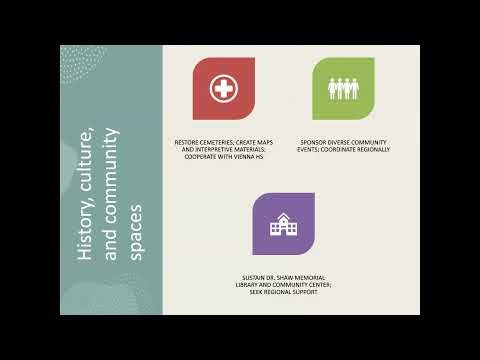
The presenter also summarized community and cultural priorities (cemetery restoration, library and community-center support), agricultural and forestry measures (a town farm directory, upholding Maine’s right-to-farm rules, forestry outreach), and aging-in-place initiatives (volunteer networks, elder check-ins, and accessory-dwelling-unit guidance).
For next steps, the presenter asked residents for feedback on how best to collect input and said the planning team will issue a survey soon and consider public forums, hearings or focus groups. The presenter told attendees to watch the town website and newsletter for the survey and updates.
No formal motions or votes were recorded at the meeting; the session functioned as an informational outreach and a call for public input. The meeting closed after attendees were invited to participate in the forthcoming survey and related outreach.