Get Full Government Meeting Transcripts, Videos, & Alerts Forever!
Get email alerts on the Composting Program topic
No spam. Unsubscribe anytime.
San Mateo County presenters outline compost procurement, testing and farmer rebates under state organic-waste law
Summary
County sustainability and the Resource Conservation District briefed the Agricultural Advisory Committee on a Compost for Climate program that has procured roughly 26,000 tons of agricultural-grade compost, offers tiered rebates to growers, and emphasizes batch testing and traceability to limit pathogen risk. Public commenters pressed for photos, funding details and infrastructure support.
San Mateo County sustainability staff and the Resource Conservation District told the county Agricultural Advisory Committee that a coordinated county–city program has purchased about 26,000 tons of certified agricultural compost to support farms and meet state organic-waste requirements.
Jack Steinman of the county sustainability office said the program’s aim is to build a local compost market and lower costs for farms by providing rebates and procurement scale. “We structure the program a little different. It's more based on the size of your operation,” he said, describing a tiered approach that he said equates to roughly $60 per ton for small operations, scaling down to about $20 per ton for larger buyers; the county reimburses purchases from certified suppliers rather than selling compost directly.
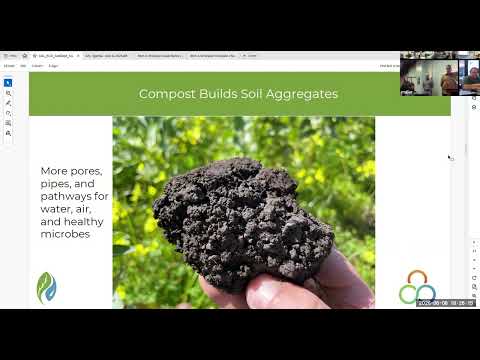
Doug Mar of the Resource Conservation District, who introduced the RCD’s farmer-centered, nonregulatory role, said compost boosts soil structure, raises water-holding capacity and reduces erosion, and that composting kept organic materials out of landfills where they generate methane. He cited California’s Senate Bill 1383 as a driver of local procurement requirements: jurisdictions must divert organics and procure recovered organic products, which in this region means compost or mulch.
Program staff emphasized quality-control steps producers take — batch tracking, temperature monitoring and laboratory analysis — to ensure pathogen kill and agricultural safety. “Not all compost is quality compost,” Mar said, describing traceability systems and industry certifiers that document pile management and testing.
Committee members queried technical and logistical details. One member asked how the county verifies compost quality; presenters explained that producers track batches, that county staff or RCD staff can sample and that certified facilities follow documented processes to maintain high temperatures sufficient to inactivate pathogens. On the SB 1383 statewide target, presenters said performance varies across jurisdictions: a handful of cities have met 100% diversion targets, while others remain below the target and the county’s program is intended to increase local market capacity.
Public commenters pressed for additional materials and operational clarity. Ron asked for before-and-after photos showing compost effects on fields; Carrie Burke asked how much of the RCD’s work is farmer-facing versus contracted to public agencies; another caller, identified as Jas, sought details on infrastructure grants and whether on‑farm systems or spreading equipment are eligible.
Presenters said infrastructure investments can be eligible under state programs referenced in the presentation (AB2346 / AB246 were both mentioned during the discussion) and that the county’s rebate pot is currently intended to cover deliveries and spreading where the rebate exceeds delivered cost. They advised farmers to sign up early because the program operates on a first-come basis for reimbursement and encouraged direct contact with RCD staff for farm-specific logistics.
The committee did not vote on the program. Presenters urged farmers who are interested to contact the RCD or county sustainability to schedule soil sampling and to determine appropriate application rates.
What’s next: program staff said they will continue procurement and outreach, and farmers seeking rebates or technical assistance can contact the RCD and county sustainability teams to arrange sampling, ordering and verified delivery.