Get Full Government Meeting Transcripts, Videos, & Alerts Forever!
Get email alerts on the Sanitation topic
No spam. Unsubscribe anytime.
Bay City sanitation manager urges individualized billing for multi-tenant commercial properties
Summary
Environmental Services Manager James Blake told the commission that treating multi-tenant commercial buildings like separate businesses — rather than one multi-family residential unit — would improve accountability, revenue accuracy and administrative efficiency; staff said grants for commercial cardboard dumpsters are being pursued.
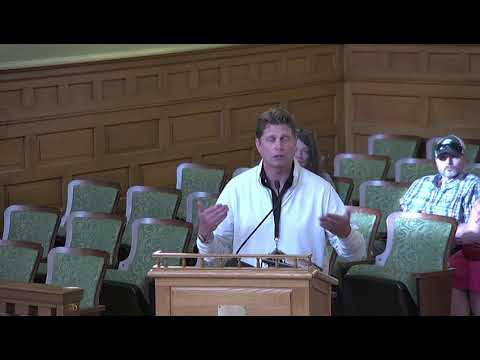
James Blake, Bay City’s Environmental Services Manager, told the City Commission on June 15 that the city should treat multi-tenant commercial buildings differently from multi-family residential dwellings for trash billing. He said the current ordinance (section 86-71, paragraph C) treats a multiple-family dwelling with 11 or more units as a single unit for billing, but that model can hide heavy waste generators inside a single building.
Blake said individualized billing for commercial tenants “provides direct accountability” and prevents a high-volume business from being effectively subsidized by lower-volume neighbors. He argued individualized billing would also improve “revenue accuracy” and streamline certification of unpaid fees to the tax roll under section F.
The presentation described operational limits: the city has a small administrative staff for sanitation and prefers administrative updates (section D) to slow ordinance changes. Blake said the city does not currently provide dumpster service to commercial buildings but that businesses can obtain dumpsters from private vendors; he added the city is pursuing grants and a pilot for commercial cardboard dumpsters to support shared services downtown.
Commissioners pressed staff on practical effects. Commissioner Kubiak asked whether a commercial building could obtain one dumpster (Blake: yes, but not through the city’s sanitation service) and whether businesses that opt out would still be charged (Blake: yes, they would remain responsible under current policy). Commissioners also requested data on how much revenue recyclables generate; staff said they would supply those figures.
Blake and commissioners acknowledged complexity for condominium associations and apartment complexes and said staff would follow up on classification questions and consider operational fixes to reduce curb clutter while preserving user-fee fairness.
The commission did not take a formal vote on ordinance text at the meeting; Blake framed the proposal as an administrative billing change that can be implemented more quickly than reopening the ordinance.