Get Full Government Meeting Transcripts, Videos, & Alerts Forever!
Get email alerts on the Sanitation topic
No spam. Unsubscribe anytime.
Sanitation manager urges individualized billing for multi‑tenant commercial properties
Summary
At the June 15 Bay City City Commission meeting, James Blake, the city’s environmental services manager, urged the city to bill multi‑tenant commercial properties individually rather than treat buildings with 11 or more units as a single unit, citing accountability, revenue accuracy and downtown space constraints.
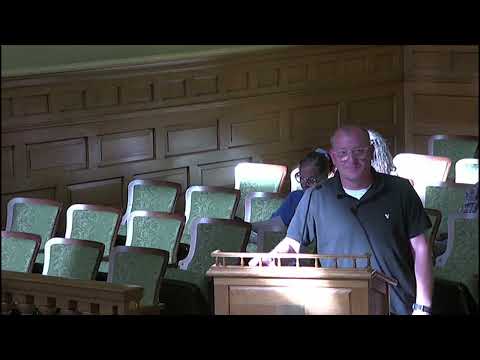
James Blake, environmental services manager for the city of Bay City, asked the City Commission on June 15 to allow individualized billing for multi‑tenant commercial properties, rather than treating buildings that house 11 or more units as a single billed entity under section 86‑71 of the city code. "I'm the environmental services manager for the city of Bay City. I'm in charge of running the sanitation department every day," Blake said, introducing the proposal and the code section that defines how the city currently treats multi‑family and multi‑tenant properties.
Blake told commissioners the current ordinance treats a multi‑family dwelling with 11 or more residential units as a single property for billing, which made sense for apartment buildings that typically use a single large dumpster. He argued the rule is less appropriate where one building contains multiple separate businesses with differing waste profiles. He said individualized billing helps ensure direct accountability for waste generation, capture revenue that reflects economic activity on site, and streamline administrative enforcement when fees go unpaid.
During a question‑and‑answer period Commissioner Kubat asked whether a commercial building with many businesses could get its own dumpster through the city. Blake said businesses can obtain dumpsters but "they cannot get it through us because we do not offer that service because we don't have the infrastructure to do that at the current moment" and that businesses seeking dumpsters would need to outsource the service. When asked whether businesses that opt out of city cart service would still be charged, Blake answered, "Yes. Yep, that is correct," explaining the fee structure is intended to keep residential costs lower by spreading fixed service costs.
Blake also acknowledged staffing limits in the sanitation office and said individualized billing could reduce ambiguity when pursuing liens or certifying unpaid fees to the tax roll: "If businesses are billed individually, the city can more easily identify which specific entity is delinquent, providing clearer documentation." He said the department is exploring pilot options such as commercial cardboard dumpsters and that grant funding could help establish sidewalks for commercial drop‑off service.
The presentation was informational; commissioners asked follow‑up questions but took no immediate ordinance change at the meeting. Blake recommended administrative changes and potential grant‑funded pilots to refine service options downtown; commissioners asked staff to return with additional details if and when a program structure or funding source is identified.