Get Full Government Meeting Transcripts, Videos, & Alerts Forever!
Get email alerts on the Motorized Bike Safety topic
No spam. Unsubscribe anytime.
Residents and officers warn of rising risk from motorized bikes; committee discusses enforcement and education
Summary
Residents told the Fall River Committee on Public Safety that unregulated motorized bikes are causing crashes and near-misses; Police Chief J.T. Hoar outlined enforcement steps, training needs and signage while councilors discussed ordinance clarifications and possible tougher penalties.
Helen Rego, a Fall River resident, told the City Committee on Public Safety that a motorized cycle struck her car near the Niagara fire station, causing about $12,000 in damage and leaving her worried a more serious injury will occur. “Somebody's going to get killed there,” Rego said during the committee’s citizen‑input period.
The committee also heard from John Silvia, who said tents and people pushing wagons in the wetlands near the Route 24 southbound ramps pose a hazard to exiting traffic. “As you're taking the exit to get off at 30 miles an hour, 40, they just like stop walking in there,” Silvia said, urging the city to address the encampment.
Sandy Dennis described a recent near‑miss near the Little Theater and urged the committee to develop a middle‑school bike and cycle safety program paired with enforcement. “Education, perhaps paired with enforcement, can help prevent injuries,” Dennis said, referencing earlier local efforts such as Mass in Motion and the Full Road Bike Committee.
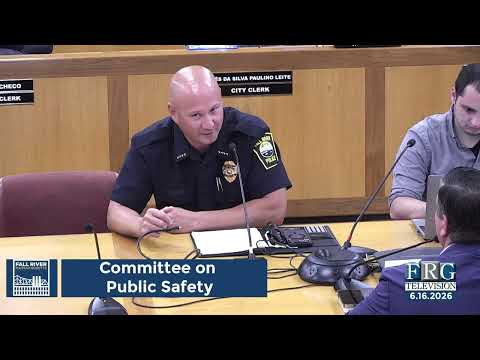
Police Chief J.T. Hoar, who said the city’s problem has evolved over six years from ATVs and dirt bikes into e‑bikes that can be modified, described steps the department is taking: public service announcements, targeted signage with the traffic department, rerouted directed patrols, and operations that have removed several high‑risk bikes from neighborhoods. Hoar said many of the modified e‑bikes fall into a legal gray area and sometimes “classif[y] itself as a completely separate item” when modifications boost top speed, meaning it must be treated like a motorcycle for licensing and registration purposes.
Councilors pressed the chief about whether the existing city ordinance (70‑14) and state law (MGL c.90 §1) need updating to clarify the distinction between motorized scooters, class‑1 and class‑2 e‑bikes, mopeds and motorcycles. Councilor Cannuel noted the current ordinance allows confiscation and a $100 fine, and suggested the council consider higher fines or different forfeiture procedures for modified vehicles that travel at unsafe speeds.
Chief Hoar said enforcement hinges on clearer internal training and public education so officers can identify which devices fall under which classification. He said the department uses targeted, surprise operations and electronic documentation of stops to build enforcement cases rather than initiating risky high‑speed pursuits.
After discussion, the committee voted to table further ordinance action and asked the chief to prepare a one‑page summary for officers and to work with the training division and the ordinance committee on potential language changes. The committee did not adopt a new ordinance at the meeting.
The committee’s next procedural step was to refer clarifications and any proposed ordinance changes to the ordinance committee and to continue monitoring locations flagged by residents, including the Route 24 ramps and the waterfront stretch near the Vault Street electronic billboard.