Get Full Government Meeting Transcripts, Videos, & Alerts Forever!
Get email alerts on the Historic Preservation topic
No spam. Unsubscribe anytime.
Preservation group urges delay for Fall River’s former Central Police Station; building commissioner says structure is a public‑safety hazard
Summary
Preservationists told the Historical Commission the city provided no engineering reports showing an emergency for 158 Bedford St. and urged enforcement of the one‑year demolition‑delay bylaw; the building commissioner said the property has been condemned and the commission voted to seek corporate‑counsel guidance on its authority.
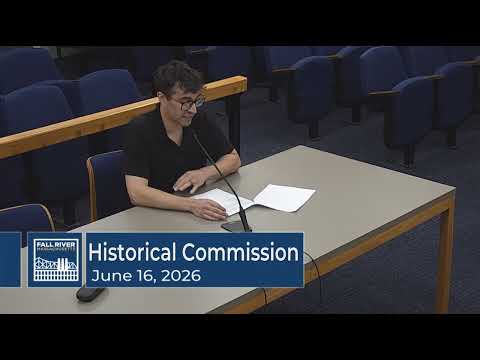
Preservationists and commissioners clashed over the fate of the former Central Police Station at 158 Bedford Street on Tuesday, June 16, as the Fall River Historical Commission debated whether the city law that imposes a one‑year demolition delay on significant structures still applies.
“To date, the evidence presented by the building department has failed to demonstrate that conditions at 158 Bedford Street have deteriorated to the point of constituting an immediate public emergency,” Alexander Silva, president of the Preservation Society of Fall River, told the commission. Silva said the society had requested engineering and inspection reports demonstrating an immediate threat and warned that bypassing the delay would eliminate time to pursue stabilization, adaptive reuse or salvage of historic fabric. He also cited an approximately $1.4 million demolition allocation and asked the commission to see any recent assessments.
Building Commissioner Glenn Hathaway responded that the structure has been idle for decades, has extensive water damage and interior collapse, and that he had officially condemned the building as a public‑safety hazard. “To see a building in the condition that it’s in right now … it’ll answer all your questions,” Hathaway said, offering to escort commissioners inside and saying the city has now allocated funds to complete demolition. He cited state law and building‑code provisions as the basis for removing the commission’s one‑year delay authority when the building commissioner declares an imminent danger.
The exchange centered on two legal questions: whether the building commissioner’s condemnation, as conveyed in written correspondence, removes the Historical Commission’s ability to impose the one‑year delay on city‑owned properties, and whether the record includes adequate documentation (engineering reports, dated inspections, or cost estimates) to substantiate an emergency. Commissioners repeatedly requested copies of any structural reports or assessments; several said they had not seen those materials in the meeting packet.
After discussion, the commission voted to request a formal legal opinion from corporate counsel clarifying the commission’s authority and the standards that trigger the ordinance’s “imminent danger” exception. The motion to seek counsel carried on a recorded vote (four yes, three no). The chair said he would contact corporate counsel promptly and offered to include commissioners on the consultation; commissioners also asked counsel to advise on what documentation the commission should require for the public record.
The commission did not reverse or impose any demolition delay during the meeting. Preservation advocates asked for time to review reports and to pursue salvage options for historic elements if demolition proceeds. The building commissioner maintained that public safety—citing repeated fence failures, falling cornice pieces, interior collapsing floors and long‑standing neglect—requires demolition action now.
Next steps: the commission will seek the corporate‑counsel opinion and requested the building department provide any available engineering reports or documentation before the next meeting. No further formal action on demolition was taken at this meeting.