Get Full Government Meeting Transcripts, Videos, & Alerts Forever!
Get email alerts on the Homelessness topic
No spam. Unsubscribe anytime.
Wausau officials hear shelter progress as county public‑health coordinator outlines data‑driven five‑year plan
Summary
Bridge Street Mission and county staff told the Wausau Public Health & Safety Committee the shelter has served 119 unique guests since April and county public‑health coordinator Megan Barnett outlined a framework prioritizing data, roles and community engagement toward a coordinated five‑year homelessness plan to present in December.
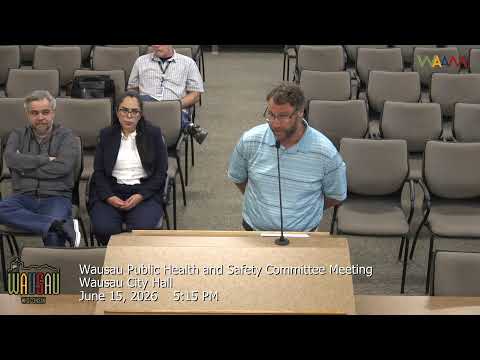
The Wausau Public Health & Safety Committee heard an update on the city’s new shelter and county coordination efforts, and County Public Health Coordinator Megan Barnett laid out a short‑term framework intended to lead to a five‑year strategic plan.
Craig Vincent of Bridge Street Mission reported the shelter opened April 20 and, through the most recent night, had served 119 unique guests and provided a little over 3,000 bed‑nights. Vincent said 32% of guests have been women and that five guests were indefinitely dismissed for behavior that threatened staff or other guests. He said the shelter’s community navigator has placed three people into permanent housing and nine into recovery programs so far, and that staff hope to expand the day‑center operation to seven days per week by the fall to provide both day‑ and nighttime services.
Barnett, who was hired in March by the county as a public‑health coordinator focused on homelessness response, told the committee the immediate priorities are building reliable data, clarifying roles and leadership between the city and county, and engaging the public. “When I ask people to quantify how many people are unhoused, nobody can answer,” Barnett said, describing a lack of interagency, name‑level real‑time tracking that she plans to address. Her team’s near‑term deliverable is a coordinated, longitudinal framework through the end of the year that will feed a December joint presentation to the county board and city council of a five‑year strategic plan, with the goal of beginning implementation January 1.
Committee members pressed for clarity about capacity and past denials of service. Vincent acknowledged the shelter reached capacity within about four days of opening and said staff have had to turn some people away, primarily on the men’s side; he described planned overflow procedures for extreme weather events. He also said only five guests had been permanently dismissed for criminal behavior and that the shelter works to provide reentry meetings for those dismissed.
Committee discussion noted county funding for the night shelter and the county’s contribution to staffing. Members asked that Bridge Street Mission and the city’s community‑outreach specialist coordinate reporting so the committee receives consistent monthly or quarterly metrics. The committee directed staff to return with a reporting cadence at the next meeting.
Next steps: Barnett said she will pursue the data systems and interagency communication needed to quantify the local unhoused population and will bring a timeline for listening sessions and community engagement. Bridge Street Mission and the county agreed to supply monthly operational data to the committee going forward.