Get Full Government Meeting Transcripts, Videos, & Alerts Forever!
Get email alerts on the Energy Policy topic
No spam. Unsubscribe anytime.
Senate committee advances bill to repurpose Wyoming gas into manufactured energy products and fast‑track permits
Summary
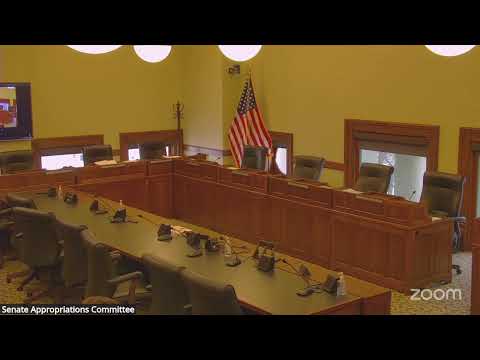
The Senate Appropriations Committee voted to pass House Bill 120 as amended. The bill would let Wyoming producers convert natural gas into higher‑value manufactured products, establish a fast‑track zone inside existing industrial zones, and create a voluntary 'gold standard' clean‑energy certification intended to attract Asian buyers, proponents said.
Representative Campbell outlined House Bill 120 as a plan to move Wyoming natural gas up the value chain by manufacturing higher‑value products inside state boundaries and fast‑tracking permitting in designated zones. "What we're doing…is take natural gas as a raw feed stock and we're going to manufacture…ammonia, and carbon black," Campbell told the Senate Appropriations Committee, also using two terms in the transcript that appear unclear ('turquoise' and 'emerald').
Campbell said the proposal would create a special, expedited permitting zone inside existing industrial zones so projects could become "shovel ready in like 180 days," and he argued the measure would rely on private investment rather than state subsidies. "This is using no tax dollars, no subsidies," he said, adding that construction and ad valorem taxes from large facilities could generate local school revenue for counties like Lincoln.
On markets, Campbell said long‑term contracts from Asian buyers make the opportunity attractive and described a voluntary certification the Wyoming Energy Authority could issue so buyers would pay a premium for lower‑carbon product. "The South Koreans and the Japanese very specifically will pay a five to 15% premium for energy that is able to show that it is the cleanest fuel in the world," he said.
Senator French pressed Campbell on export logistics and transport to Japan and South Korea. Campbell replied that existing pipelines could be repurposed to carry ammonia with valve and compressor upgrades, that rail could move product to coastal export points, and that specialized ammonia carriers could transport product overseas. He described ammonia as a convenient carrier that can be converted back to hydrogen on arrival and cited Japanese use of ammonia mixed with coal to meet emission targets.
The committee also reviewed fiscal language and an amendment from the minerals committee that removed a 2% severance tax reduction originally proposed as an inducement for in‑state manufacturing. Committee members discussed an appropriation line for Department of Revenue IT costs that appeared in committee paperwork as $36,000 or $43,000; Matt Sache, administrator of the mineral tax division at the Department of Revenue, told the committee the IT appropriation was no longer necessary because the severance tax reduction had been removed.
Committee members moved to delete the appropriation language (committee discussion referred to removing page 14, lines 13–23, and page 15, lines 1–3). The committee then took a roll call vote on House Bill 120 as amended. Senator French, Senator Larson and Chairman Salzar voted "Aye;" Senators Driscoll and Garoo were excused. The clerk announced "Do pass amended."
Next steps: the bill was approved by the appropriations committee as amended and will proceed according to Senate rules for further consideration.