Get Full Government Meeting Transcripts, Videos, & Alerts Forever!
Get email alerts on the Anti Slapp And Litigation topic
No spam. Unsubscribe anytime.
Attorney defends anti-SLAPP revisions, committee punts technical fixes to interim review
Summary
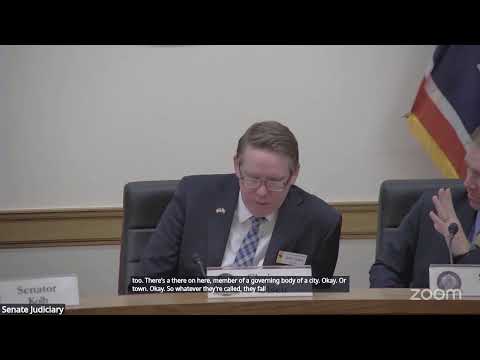
An attorney who helped draft parts of House Bill 103 testified before the Senate Judiciary Committee, defending the bill as a tool to correct perceived procedural imbalances and urging drafting fixes (including changing a fee award from 'may' to 'shall'); the committee closed public testimony and the chairman said the topic would be taken up in interim work.
Committee members reopened consideration of House Bill 103 for the final public comment before the committee's limited time expired. Mr. Rendenza, a lawyer who said he had drafted portions of the bill, summarized key practical goals: to correct the procedural imbalance that can make the process the punishment for speakers and to ensure meritorious defendants can obtain relief early in litigation.
On fee shifting and balance, Rendenza argued the bill should require a court to award fees in bad-faith or frivolous suits rather than leave the award to the court’s discretion. "I would change that word may to shall," he said, urging a mandatory fee award where suits are brought in bad faith. He also recommended removing retroactive language in the draft and criticized the uniform anti-SLAPP model as overly procedural and not attentive to how federal courts handle choice-of-law and discovery disputes.
He described practical litigation pitfalls: federal claims can be tacked on to defeat state-only procedural protections; Nevada- and California-style 60-day early-resolution periods often do not operate as intended in federal litigation; and courts’ handling of stays on discovery varies. He used a concrete example from out-of-state litigation, saying an anti-SLAPP fee rule that shifted fees to the prevailing party produced perverse results in a Florida case involving a trafficking survivor who was sued for statements in a police report.
Committee disposition. Public testimony concluded and the committee discussed the bill’s deficiencies. Some members said they saw merit in the bill’s aims but that the draft contained too many holes; others supported taking the issue to interim study. Chairman Olson said he would bring the topic forward as an interim item for further work rather than passing the draft in its present form.
Why it matters. Anti-SLAPP statutes change how early motions and fees are handled and can alter the incentives that govern litigation about public participation and alleged defamatory statements. The committee's decision to pursue interim work leaves the substantive goals under review while delaying any immediate committee endorsement.
Next steps. Chairman Olson said he would refer the matter for interim consideration, and no final committee vote on HB103 was taken during this session.