Get Full Government Meeting Transcripts, Videos, & Alerts Forever!
Get email alerts on the Legal Procedure topic
No spam. Unsubscribe anytime.
Anti‑SLAPP bill prompts sharp questions on evidence limits, attorney fees and retroactivity
Summary
Representative Otman’s House Bill 103 would create a substantive immunity for constitutionally protected speech; the governor's counsel and trial lawyers raised due‑process and drafting concerns, while privacy and free‑speech advocates and a constituent urged quick adoption with targeted fixes.
Representative Samson Otman introduced House Bill 103, the Wyoming First Amendment Protection Act, saying the measure would provide substantive immunity for constitutionally protected activities and a faster route for defendants to test and remove meritless suits filed to chill speech.
The sponsor framed the bill as protection for a broad range of speakers—individuals, small publishers and civic participants—and described mechanisms including an immunity test that could be raised by motion, an interlocutory appeal if a court denies immunity, and mandatory fee‑shifting for successful immunities. He said the statutory immunity was chosen to ensure the protection would be respected in federal courts as well as state courts.
Committee members expressed concerns about several drafting choices. Witnesses and senators questioned a provision that would limit the evidence a court may consider when resolving an immunity motion to pleadings, a motion and limited affidavits. The governor’s office flagged potential due‑process problems with disallowing supplemental briefing or treating a dismissal as per se proof an immunity motion is meritorious. The Wyoming Trial Lawyers Association called the bill overly broad and urged more narrowly drawn exemptions; their counsel said other states’ statutes include many more carveouts than HB103 currently lists.
Senators also scrutinized mandatory award language for attorney fees and whether fee shifting should be discretionary or two‑sided. Representative Otman and bill supporters said fee‑shifting is essential to deter meritorious‑in‑appearance suits that are used as tactical litigation to silence critics. The sponsor’s counsel said drafters will propose targeted edits, including converting any irrebuttable presumption to a rebuttable presumption, adding a seven‑day pre‑fee notice requirement, and removing retroactive application for pending cases.
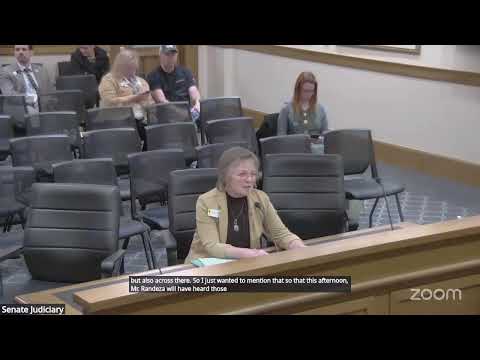
Several public witnesses described the real effects the sponsor aims to prevent. Ki Cochran told the committee she was served with two petitions to appear in court alleging stalking for social media posts criticizing local school officials after a family tragedy; both petitions were later dismissed but, she said, the stress and cost were severe. "I was stunned and overwhelmed. I didn't have an attorney and I was expected to be in court in less than two weeks," Cochran said.
Parker Jackson of the Goldwater Institute (online) urged the committee not to delay, arguing anti‑SLAPP protections deter frivolous suits and facilitate speedy disposition. Committee members asked for more technical answers and planned to reconvene at noon with an online expert (attorney Mark Randazza) to address discrete drafting and evidentiary questions.
The committee recessed for lunch and signaled it would consider sponsor adjustments addressing evidence limits, fee‑shifting mechanics and retroactivity when it reconvened.