Get Full Government Meeting Transcripts, Videos, & Alerts Forever!
Get email alerts on the Udo topic
No spam. Unsubscribe anytime.
Mayflower planning commission advances UDO review, schedules May 29 workshop
Summary
The Mayflower Planning Commission continued a line-by-line review of a draft Unified Development Ordinance, debated lot widths, nonconforming-use timelines and manufactured-home policy, and scheduled a public UDO workshop for May 29, 2025.
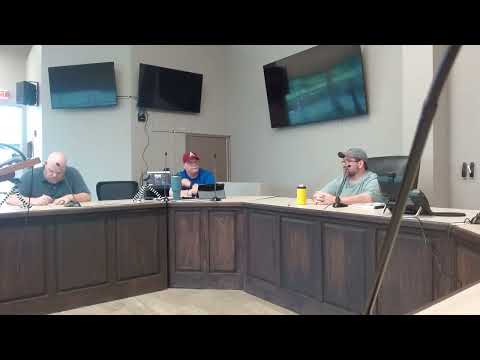
The Mayflower Planning Commission on May 13 reviewed a draft Unified Development Ordinance (UDO) intended to replace overlapping zoning ordinances and streamline development rules. Commissioners agreed to hold a public UDO workshop Thursday, May 29 at 6:30 p.m. to continue detailed review and solicit public feedback.
Commissioners and staff described the UDO as a template drawn from a Metro Plan product that the city will adapt. They said the process will include staff edits, planning commission review, a public open house, and final consideration by the city council. No vote on adoption occurred; the commission’s next workshop will focus on mapping, cross-referencing the draft with existing code, and resolving contradictory language.
Key substantive debates at the meeting included: whether to retain a 60-foot minimum lot width as the default for most single-family neighborhoods or to more broadly authorize smaller ‘flexible residential’ lots for patio and zero-lot-line housing; how to reconcile inconsistent nonconforming-use language that currently mentions both a 12-month permit window and a 24-month reconstruction allowance; whether to preserve existing manufactured-home (R1 MH) areas via a dedicated column in the code or to create a new zone that preserves current uses but limits future expansion; and proposed increases in building-coverage limits that some commissioners warned could worsen stormwater runoff.
Commissioners also debated height limits in commercial corridors: the draft allows up to five stories, but several members said three stories are more realistic given current water and fire-suppression infrastructure, and that taller development should remain conditional on demonstrated infrastructure capacity.
Staff was asked to prepare a redlined comparison showing the draft UDO text side-by-side with currently adopted code for the next workshop, to identify conflicting provisions (for example, the differing reconstruction timeframes) and to propose clarifying amendments. The commission emphasized a preference for a pragmatic approach: preserve existing lawful uses where appropriate, avoid unintended litigation risk, and provide clear rules for new development.
The commission did not take final action on the UDO; the next public workshop is set for May 29, 2025 at 6:30 p.m. in the same meeting venue.