Get Full Government Meeting Transcripts, Videos, & Alerts Forever!
Get email alerts on the River Access topic
No spam. Unsubscribe anytime.
Berry Rivers Collective and district explore river‑access collaboration at facilities meeting
Summary
At a Barre Unified Union School District #97 facilities meeting, the Berry Rivers Collective presented a river‑access master‑plan rendering and discussed possible collaboration with the district’s planned athletic‑field upgrades; state flood rules and liability for student access were key concerns.
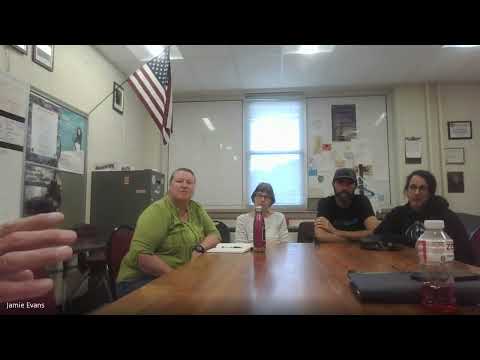
At a meeting of the Barre Unified Union School District #97 Facilities Committee, representatives of the Berry Rivers Collective presented a conceptual river‑access master plan and asked the district to consider coordinating the work with planned athletic‑field upgrades at Spalding and nearby sites.
"I'm Danielski and I'm the chair of that committee," the Collective chair said while introducing members who have run river cleanups and youth engagement activities. The group said it applied for a state recreation grant and worked with the National Park Service to produce a conceptual rendering the committee received.
The Collective urged the district to consider Spalding, Rotary Falls and a north‑end site among its top priorities; the rendering and a master‑plan approach, the presenters said, could help assemble eligibility for additional funding and ensure river access is paired with flood mitigation work. "We thought this would be a good one to push forward," the Collective said of Spalding.
District staff described an athletic rendering that would reorient baseball and softball fields to create open space for multiuse turf, a rubberized track and walking paths, but cautioned that construction and permitting would take years and depend on funding. Staff also raised the limits imposed by state flood rules, noting that some types of building along the riverbank are not permitted: "you can't build BMS along the riverbank ... the state will not allow you to build BMS," a staff speaker told the committee.
Speakers discussed a range of features that "river access" could mean, from defined overlooks and classrooms for stream sampling to places where students could enter shallow water with supervision. The district facilities director flagged liability concerns tied to students and water and said access types would need careful planning.
The Collective said watershed modeling (work referenced by the engineering firm SLR) and prior buyout work inform where resilient access points are feasible; they also noted grants and partners that could help pay for bank armoring or other erosion control upstream of school fields. "Once we have that conversation, we can figure out what we actually can do, what's realistic," the Collective said.
Committee members asked the Collective to send the National Park Service rendering and related materials by email so staff could review potential overlaps with the district’s field concept and financing timeline. No formal commitment or vote was taken; the Collective and staff agreed to follow up by email and explore whether river access features could be incorporated into future engineering and funding efforts.
What happens next: the Collective will forward the rendering and information to district staff for review; any project that moves beyond conceptual design will require engineered plans, grant applications and regulatory review before construction.