Get Full Government Meeting Transcripts, Videos, & Alerts Forever!
Get email alerts on the Fundraising Contract topic
No spam. Unsubscribe anytime.
Council approves up to $70,000 fundraising‑consultant contract for Port Orchard Event Center
Summary
The Port Orchard City Council approved a contract with Northwest Philanthropic Partners for up to $70,000 to conduct a Phase One/feasibility fundraising study for the Port Orchard Event Center; consultant Brad Thomas told the council the campaign goal would be roughly $5–5.6 million and recommended 25 confidential stakeholder interviews and a steering committee.
The Port Orchard City Council voted to hire Northwest Philanthropic Partners to lead Phase One and a feasibility study for fundraising tied to the Port Orchard Event Center, approving a contract not to exceed $70,000 in a form acceptable to the city attorney. The motion passed by voice vote after a council presentation and discussion.
Fundraising consultant Brad Thomas, who said he and partner Nate Hersy are locally based, told the council the combined Phase One/feasibility work would test whether a $5 million target (with a $5–5.6 million practical goal to cover campaign costs and leave $5 million for the city) was realistic. He outlined core tasks that include developing a campaign plan and gift table, conducting at least 25 confidential stakeholder interviews, identifying and recruiting a steering committee of business and community leaders, researching institutional grant opportunities, and setting up donor‑management tools.
Thomas described prior experience leading capital campaigns ranging from household healthcare facility efforts to multi‑million dollar college projects and said the feasibility phase would return findings and recommendations at the end of August. He recommended the steering committee meet monthly during the first year to identify and interview prospective lead donors and suggested the public phase of the campaign would generally begin after reaching roughly 60% of the fundraising target.
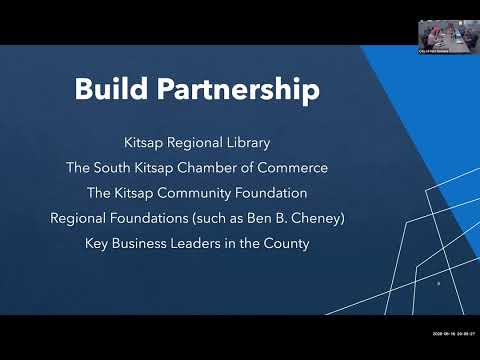
Council members asked about payment schedules for large gifts and naming‑rights levels. Thomas advised that donors often pledge over three to five years for very large gifts and that lead donors commonly choose to accelerate payments; he said naming opportunities (building, plaza, meeting rooms) would be developed in Phase One. He also recommended the Kitsap Community Foundation as a partner for gift processing to ensure donors receive proper charitable receipts.
The council motion to execute the contract was moved and seconded and adopted by voice vote. Council members indicated they expect the consultant to report back with a Phase One/feasibility report in August and, if supported, to begin Phase Two in September. The council also directed staff to bring a contract acceptable to the city attorney for final execution.
Next steps: consultant reporting at the end of August, steering‑committee formation and initiation of confidential interviews; Phase Two would follow contingent on feasibility findings and local fundraising progress.