Get Full Government Meeting Transcripts, Videos, & Alerts Forever!
Get email alerts on the Public Comment And Technology topic
No spam. Unsubscribe anytime.
Residents press committee to keep new Lebanon wastewater plant in city limits or adopt smaller, enclosed technology
Summary
Two hours of public comment urged the committee to avoid siting the plant in rural county neighborhoods, warned of legal risks if near schools, and asked for transparent cost comparisons between conventional 60‑acre layouts and smaller membrane technologies that reduce odor and footprint.
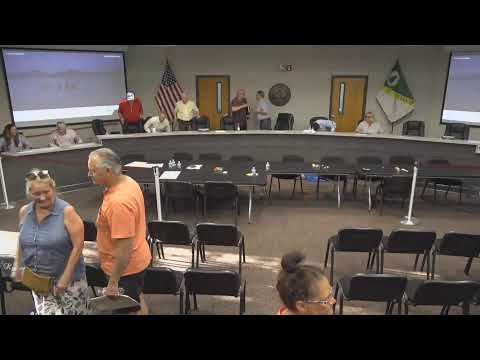
Dozens of residents turned out and urged the Lebanon committee to avoid placing a new wastewater treatment facility in the county outside the city’s urban growth boundary, warning of legal and community consequences if the plant is sited near homes or schools. Speakers called for clearer, public cost comparisons of conventional activated‑sludge systems versus smaller-footprint membrane technologies that can be enclosed and produce fewer odor impacts.
Several public commenters asked the committee to prioritize in-city options. The county mayor told the committee he will ask the county commission to formally advocate keeping the plant within city limits. “For the people that live in the county…this is their dream home,” the county mayor said, asking the panel to take residents’ concerns into account when shortlisting sites.
Residents cited proximity to Friendship Christian School when urging the committee to mark several candidate sites as low in land-use compatibility. “Sites three, four, five, and six are clustered right along Berea Church and Cooh’s Ferry Pike,” a speaker said, warning the panel that school proximity could trigger federal review — a point several commenters linked to potential Title VI or environmental‑justice challenges if federal funds are later sought.
Supporters of Rockwood (site 13/13A) also addressed the committee, arguing the parcels are available and could provide large, banked acreage adjacent to town. “When you are in the 44 acre site…there’s no doubt in your mind that the next sewer plant is going on that site,” one resident said, offering owner contact information and urging staff to pursue willing-seller negotiations before discussing eminent domain.
Technical questions were raised repeatedly: members of the public and some committee members asked for explicit comparisons of lifecycle capital and operating costs for different technologies, and whether smaller, covered membrane systems could fit selected parcels and reduce odor risk. Staff acknowledged membrane and MBR options exist and cost more per gallon, but told the committee that more detailed cost studies could be provided during the next evaluation phase.
The meeting closed after the committee reiterated submission procedures for member scoring and scheduled a follow-up meeting to review tabulated results. Multiple speakers urged the committee to pause any further site elimination until technical, geotechnical and environmental reports are available for shortlisted parcels.