Get Full Government Meeting Transcripts, Videos, & Alerts Forever!
Get email alerts on the Bond topic
No spam. Unsubscribe anytime.
Robbinsdale board authorizes consultants to submit review-and-comment on proposed multi-question building bond; vote 5–1 (1 abstention)
Summary
After hours of discussion about tax impact, timing and program placement, the Robbinsdale Public School District board voted to authorize consultants to file the statutorily required review-and-comment with MDE for proposed bond questions. Motion passed 5–1 with one abstention; board discussion laid out three contingent question levels.
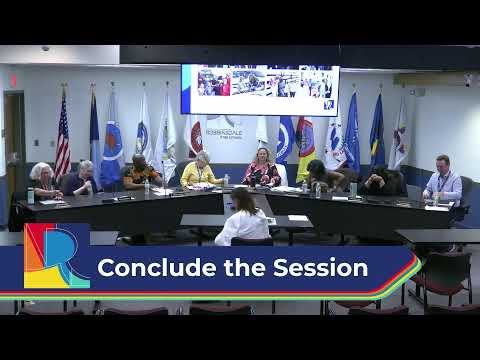
The Robbinsdale Public School District board on Monday voted to authorize consultants to submit a required “review and comment” document to the Minnesota Department of Education that begins the formal state review of possible school-building referendum questions. Chair Evans Becker moved the motion; Director Bowman seconded it. The board approved the action on a roll call of five in favor, one opposed (Director Caroline Long) and one abstention (Director Basset).
The filing does not place a referendum on the ballot by itself, but it initiates the state’s required review (a 60-day process) so the district can proceed toward a potential November referendum if the board later approves ballot language. Consultants and staff outlined three tiered question packages during the meeting: question one as a base package (approximately $343 million, roughly $15 per month for the average homeowner in the district as modeled by consultants); a second, contingent question that would add roughly $17 per month only if question one passes (bringing the total ask to about $360 million); and a third question to add a new elementary-school option (an additional ≈$53 million or about $8 per month). Consultants explained the sequencing and tax-impact modeling would change depending on which packages the community approves.
Opponents cautioned that the ballot could confuse voters and that construction inflation and the district’s current bond rating complicate timing. Director Caroline Long said she would vote no, citing insufficient community engagement and unanswered operational questions, saying, “I will be voting no to advance the building referendum language for this November’s ballot for the following reasons,” and later enumerating concerns about outreach and tax burden. Supporters said the review-and-comment step is procedural and needed to allow the community to decide after the state’s feedback; proponents noted that waiting several years for a better bond rating could leave the district paying higher construction and inflation costs.
Under Minnesota’s process, review-and-comment gives the state a chance to flag regulatory or technical issues; if the board later calls a referendum the document helps set project descriptions and timelines. The board’s vote authorizes Nexus (the district’s program manager) to file the district’s review-and-comment package as drafted with two and three contingent on passage of question one.
What happens next: once the review-and-comment is submitted, MDE typically returns comments that the district must publish prior to placing questions on a ballot. The board may still modify ballot language before officially calling an election (the board would need to call an election and lock final ballot language by statutory dates later in the summer).