Get Full Government Meeting Transcripts, Videos, & Alerts Forever!
Get email alerts on the Capital Projects Procurement topic
No spam. Unsubscribe anytime.
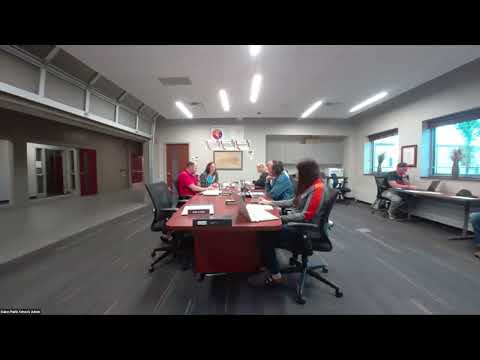
Consultant urges hard‑bid approach for Oaks mechanical projects; board to decide after facilities committee review
Summary
Following an unofficial referendum win, district consultants recommended bidding mechanical work rather than hiring a construction manager at risk for potential savings; board set a facilities committee meeting and special board meeting to choose between design‑bid‑build, CMAR, or hiring an owner's representative.
The Oaks Public School Board discussed delivery options for a recently‑approved capital project after staff presented unofficial referendum results and consultant recommendations.
Kyle, an ICON consultant, described two primary construction delivery models: design‑bid‑build (traditional hard bid) and construction manager at risk (CMAR). For the district’s primarily mechanical and kitchen work, Kyle told the board ‘‘we think that it might make more sense to just traditionally bid this project’’ because a CM’s general conditions and administration can add months and potentially hundreds of thousands of dollars in on‑site general‑condition costs.
He estimated that general conditions for a CM could be ‘‘30 or $40,000 a month’’ and that over a year those costs might amount to ‘‘300 $400,000.’’ Kyle and ICON also proposed a middle option: hiring an independent owner’s representative for roughly $30,000–$40,000 to provide on‑site observation and to help make timely decisions without full CM overhead.
Board members and staff discussed thresholds where CMAR typically adds value (around $5 million) and noted that, if desired, the district could begin with design and convert to CM during preconstruction — though that approach can incur preconstruction fees. Legal and contractual differences were explained: CMAR carries a guaranteed maximum price and performance obligations, while hard‑bid projects leave contingency control and change‑order authority with the district.
Staff also reported the district’s low‑cost loan application with the Bank of North Dakota is ranked ‘‘pretty high’’ and that they expect to secure a 2% loan, which staff estimated could save the district more than $2 million in interest. The board agreed to hold a facilities committee meeting and a special board meeting (scheduled in late June/July) to make a final decision on the delivery model.
The discussion was framed as planning and does not constitute final contract approval; the board will receive a facilities committee recommendation and take a final vote at a special meeting.