Get Full Government Meeting Transcripts, Videos, & Alerts Forever!
Get email alerts on the Social Detox Beds topic
No spam. Unsubscribe anytime.
Douglas County commissioners preview proposal to add social detox beds with Avalon Wellness and Recovery
Summary
Commissioners on June 17 reviewed a proposal from Avalon Wellness and Recovery to open four–six social detox beds in Douglas County, discussed data showing gaps in male detox capacity and debated whether county funds should subsidize a for‑profit provider; staff will continue partner talks and may bring options into the upcoming budget process.
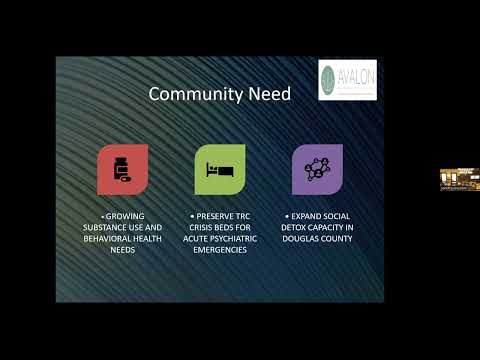
Douglas County commissioners spent a June 17 work session reviewing a proposal from Avalon Wellness and Recovery to open four to six social detox beds to address a shortage of non‑medical detox capacity, county staff and provider representatives said.
Bob Transky, the county’s director of behavioral health projects, told the commission that Avalon approached staff in March with a draft plan to operate social detox beds at the federal block‑grant nightly reimbursement rate and that staff invited SUD community partners to the meeting to surface potential benefits and risks.
If funded for a short pilot, Avalon would provide ASAM 3.2 social detox — 24/7 supervised residential care for people experiencing withdrawal who do not require medical detox — with 24‑hour nursing coverage, peer support and case management, Avalon Executive Director Ken Vic said. “It’s not about us trying to keep people,” Vic said, adding Avalon’s intent is to make warm handoffs to local treatment partners so people move to the next level of care.
Why it matters: Douglas County and its community partners say the system lacks dedicated male social‑detox beds. DECA, a county partner, currently operates two social‑detox beds for women and its peer outreach program connects people to detox and treatment. DECA Chief Behavioral Health Officer Kim Freeze told the commission that in 2025 DECA peers made 141 contacts; of those, 76 people entered detox, 55 completed detox and 50 went on to treatment, and most admits in the program were women.
Data presented at the meeting also underlined clinical complexity. Ryan Storch, a crisis services director, examined a recent two‑week sample from the county’s treatment and recovery center (TRC) and said, “In that 14‑day period, there were 14 individuals at the TRC who had just a substance use disorder diagnosis,” of whom roughly five were diagnostically appropriate for referral to social detox, noting many patients have co‑occurring mental‑health conditions that affect triage decisions.
What commissioners debated: Several commissioners and nonprofit partners said they welcome more local detox capacity—particularly for men—but raised two recurring concerns. First, whether county funds should be used to subsidize a for‑profit provider instead of directing dollars to existing nonprofit partners and peer positions. DECA staff warned that two current peer positions are funded by county allocations that could be affected if funds shift. Second, many commissioners said they prefer traditional invoice‑for‑service reimbursement over an upfront lump‑sum advance for a pilot; Avalon proposed a six‑month startup advance in its materials but said it would transition to reimbursement and provide detailed utilization reports.
Staff and partners said the session was informational, not an approval. County staff characterized the Avalon plan as a draft concept that merits further negotiation on payment structure, referral pathways, parity of service conditions and data reporting. Staff said the intent is to refine the model and, if commissioners direct, bring funding options to the reestimate/budget process this summer.
Next steps: Commissioners asked staff to convene all partners (including LMH hospital staff) together to flesh out referral workflows, workforce impacts and metrics for success. No formal vote or commitment was made at the work session; staff will return with options and additional details during the budget/reestimate cycle.