Get Full Government Meeting Transcripts, Videos, & Alerts Forever!
Get email alerts on the Governance topic
No spam. Unsubscribe anytime.
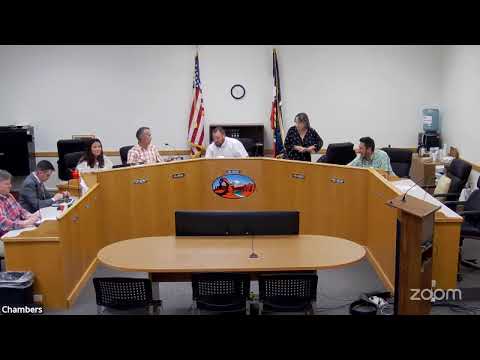
Grand County Commission debates proposed updates to policies and procedures, asks attorney for legal clarifications
Summary
At a June 16 workshop the commission reviewed a wide-ranging redraft of its policies and procedures, debating requirements for written meeting reports, substitution and voting on special service district boards, roll-call vote rules for expenditures, and a proposed quarterly priority statement; legal questions were deferred to the county attorney.
The Grand County Commission spent a substantial part of its June 16 workshop reviewing proposed updates to the commission’s policies and procedures, focusing on what the county should require of commissioners versus what should remain advisory.
Commissioner McManus and other members objected to a draft provision that would have required commissioners to file detailed written reports for every meeting they attend as representatives. "That's overburdensome," one commissioner said, arguing that some members already spend hours preparing reports and that reporting length and frequency should be left to each commissioner’s discretion. Several commissioners proposed replacing mandatory language with a recommendation and allowing a short description or a link to meeting minutes instead.
The group also debated how district and special service district (SSD) meetings should be treated. Commissioners asked staff to confirm auditor guidance that county commissioners cannot serve as SSD chairs or vice chairs for Grand County SSDs and agreed to review SSD bylaws and raise the question at upcoming SSD training. Commissioner discussion also flagged uncertainty about whether a substitute commissioner who fills in at an SSD should be able to cast a vote; the commission asked staff to clarify that practice at the upcoming training session.
On the subject of roll-call votes, several commissioners recounted recent open-meetings training that said roll-call votes on expenditures may be required by state open-meetings law. "We're going to ask Stephen"—referring to County Attorney Steven Stocks—"if he could get roll-call" for guidance, a commissioner said. The commission deferred formal changes on roll-call language until it receives legal guidance.
The draft also proposes a rolling "commission priority statement" to articulate the majority's governing priorities, published publicly and limited to 10 active items. Commissioners supported the idea but asked the language be softened to allow exceptions for "unexpected needs" and to instruct the administrator only to "endeavor" to align staff resources with the priority statement rather than to rigidly bind operational decisions.
Other governance topics reviewed included orientation and governance training: staff proposed an orientation packet for newly elected commissioners and required initial governance training within 90 days of taking office. Commissioners also asked staff to develop subcommittee "best practices"—including scope definitions, reporting cadence and membership rules—and to bring revised language back for adoption.
The commission did not vote on a final consolidated policies-and-procedures ordinance at the meeting. Commissioners directed staff to incorporate the edits discussed and to ask the county attorney for legal clarifications on roll-call requirements and SSD voting authority before the next consideration.