Get Full Government Meeting Transcripts, Videos, & Alerts Forever!
Get email alerts on the Charter Compliance topic
No spam. Unsubscribe anytime.
Charter commission proposes elected compliance board; supporters call it education, critics warn of legal risk
Summary
The charter commission proposed a five‑member elected charter compliance commission to receive citizen inquiries (25‑signature threshold), hold hearings and encourage compliance; proponents described it as educational, while some residents and select board members raised concerns about practicality and legal exposure.
The Haritch charter commission advanced a proposal to create an elected five‑member charter compliance commission that would receive signed citizen inquiries, hold hearings and issue non‑punitive findings aimed at educating officials and the public about charter requirements.
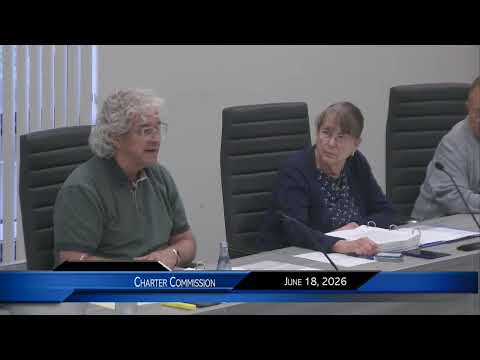
"If I did something wrong and there was an inquiry of my action to the charter, I'd probably say, 'Hey, I breached the charter and I wasn't aware of it and I'm sorry it will not happen again,'" Richard Wack, a charter commissioner, said. He emphasized the proposed commission would be an educational body rather than a punitive 'charter police.'
Under the draft discussed June 18, an inquiry would require a threshold of signatures (commission discussion suggested 25) and the commission would decide whether a hearing has merit. Commissioners said the goal is to provide a local, charter‑knowledgeable forum so citizens would have a place to raise claims of noncompliance short of immediate legal action.
Some residents and a select board member warned of drawbacks. "Could you create a situation where you are putting the town in legal jeopardy if they rule one way or the other?" asked Martha Dunovan, a resident and committee chair, voicing concern that non‑lawyer commissioners might produce public findings that expose the town to challenge. Select board member Jeff Handler said he was searching for concrete examples of past charter violations and worried the commission might be a solution in search of a problem.
Supporters replied that the threshold and limited remedies were designed to discourage frivolous complaints and to prioritize education and awareness. Commissioners said any formal legal questions would still be routed to the town clerk and to counsel as needed.
The commission did not finalize the proposal and agreed to continue discussion, including clarifying signature thresholds and the commission’s scope before incorporating the language into the draft charter.