Get Full Government Meeting Transcripts, Videos, & Alerts Forever!
Get email alerts on the Capital Plan topic
No spam. Unsubscribe anytime.
Capital‑plan revisions prompt sharp pushback over proposed two‑thirds rule
Summary
Members of the capital outlay committee and residents criticized a proposed charter change that would require a two‑thirds vote to keep projects newly moved into year‑one of the five‑year capital plan, warning it could multiply votes at town meeting and hamper routine capital budgeting.
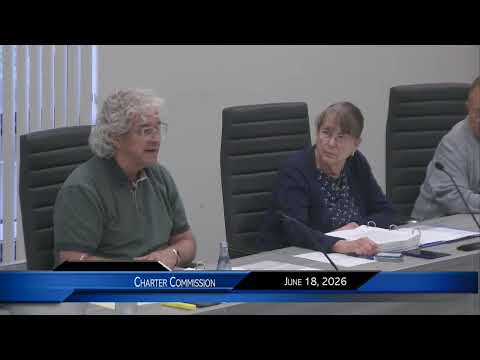
The Haritch charter commission’s proposal to require a two‑thirds vote for any project newly placed in year‑one of the five‑year capital outlay plan drew sustained objections from the town’s capital outlay committee and several residents at the June 18 public input session.
"We're making this so complicated for $4 million," said Martha Dunovan, chair of the capital outlay committee, criticizing a draft that she said deletes committee‑supplied language (cost estimates, funding sources and concise narratives) and would force separate supermajority votes for each item that appears in year‑one but was not previously on the plan. Dunovan said the committee had spent weeks preparing materials that the commission's draft did not include and worried the new wording would require legal counsel to interpret routine planning decisions.
Commission chair Linda Sabula defended the proposal as a guard against unplanned items arriving at year‑one without prior public planning: "If something hasn't been properly planned and has gone through the process of capital planning…that should take a two‑thirds vote to remain on the capital plan," she said, adding the public should have the chance to ask why a project appears suddenly in year‑one.
Speakers debated mechanics. Under the draft, a project that had never been on years two‑through‑five but appears in year‑one would require a two‑thirds vote to be included on the plan; funding votes would be separate, and funding by debt would still require a two‑thirds vote at town meeting. Committee members warned that each such new item could become a separate two‑thirds article at town meeting and estimated that would lengthen proceedings and add complexity for volunteers.
Several commenters urged compromise: group items by funding source, clarify which amendments trigger supermajority requirements, and restore the committee’s requested informational fields (cost estimates, schedules, funding sources) so town meeting and voters can evaluate proposals. The commission agreed to re‑review the capital outlay committee’s redlines and to seek additional legal review to clarify how the proposed language would interact with Mass. General Law and past local practice.
Next steps: the commission invited the capital outlay committee to a follow‑up meeting to reconcile language and said the charter drafters will revisit the two‑thirds provision and the plan’s submission requirements before finalizing the proposed charter language.