Get Full Government Meeting Transcripts, Videos, & Alerts Forever!
Get email alerts on the Pensions topic
No spam. Unsubscribe anytime.
Finance committee to commission $6,000 actuarial study before finalizing police pension levy
Summary
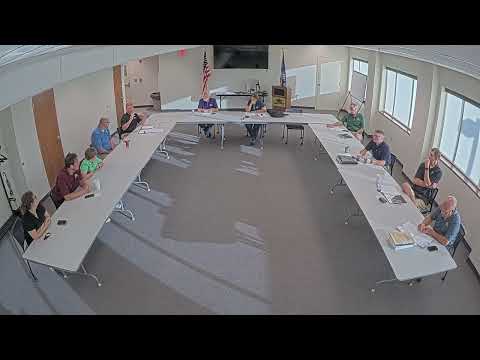
At its June 15 meeting, the Waterloo Finance Committee agreed to commission an approximately $6,000 actuarial study and review its recommendation before deciding whether to set the police pension contribution at the state statutory minimum or a higher recommended level that would increase the levy.
WATERLOO, Ill. — The Waterloo Finance Committee on June 15 agreed to commission an actuarial study to inform next spring’s police pension levy rather than immediately reduce the city’s contribution to the state statutory minimum.
A committee member argued that if Waterloo intends to pay only what state law requires, the city could skip the extra study. “If the city’s going to do what’s required under the statute … then I would just say, well, then really we don’t need to get an appraisal. I would say there’s really no need to hire an actuary,” the Committee member said.
Officials and the committee’s guest, Keith Brickman, discussed how actuarial reports go beyond the state’s baseline by modeling assumed rates of return, retirement dates and disability and transfer claims. Brickman explained that an actuarial firm uses those assumptions to produce a recommended contribution level and that the city has employed a consultant annually in recent years to refine those figures.
Committee members noted last year’s contrast between the statutory minimum and the city’s chosen contribution: “The statutory minimum like last year was like 505 and I think you levied like what 801,” one member said, citing roughly a $300,000 difference between the two figures. Committee members said the city had contributed well above the minimum in recent years — a practice some support as a hedge against future liabilities but that others worry could be eroded if state legislation combined municipal funds.
Sarah, a staff member, told the committee the actuarial firm’s turnaround is typically about six weeks after the city submits data, which would allow the committee to review recommendations before setting the levy. “I think a six week turnaround from the time I submit all the information before they give it back and make a decision before the levy,” Sarah said, noting the approximate $6,000 cost for the study.
Committee members debated the trade-offs: paying the roughly $6,000 consulting fee now to get a tailored recommendation that could advise a higher levy, versus saving the fee and defaulting to the statutory minimum to reduce the property tax levy. Several members also raised the policy risk that state action could at some point combine municipal pension pools, reducing local control of investment returns.
After discussion, the committee agreed to submit materials to the actuarial firm, wait for the firm’s report and reconvene to review the recommendation before plugging any recommended number into the budget. No formal vote on levy levels was taken at the meeting.
The committee adjourned at about 7:20 p.m.