Get Full Government Meeting Transcripts, Videos, & Alerts Forever!
Get email alerts on the Public Safety Policing topic
No spam. Unsubscribe anytime.
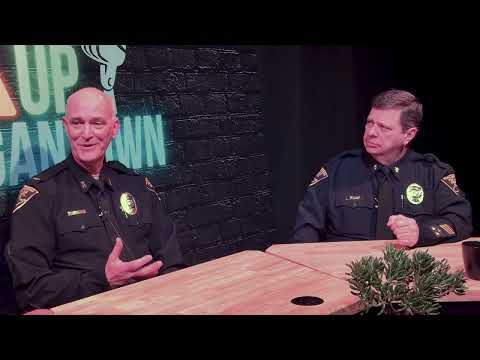
Morgantown police chief, deputy outline recruitment push and community-focused policing on city podcast
Summary
On the city podcast Mic'd Up Morgantown, Chief Eric Powell and Deputy Chief Chris Reamer said recruiting and rebuilding staff levels is a top priority while emphasizing community partnerships, de-escalation training and event coordination to keep Morgantown safe.
Chief Eric Powell and Deputy Chief Chris Reamer told the city’s Mic'd Up Morgantown podcast that recruiting and strengthening partnerships are among the department’s top priorities as Morgantown grows. "Safety is a feeling people have," Powell said, tying residents’ sense of security to trust in officers.
Powell described his local background, a criminal-justice undergraduate degree and nearly 29 years in law enforcement, noting early service with the county sheriff before joining the Morgantown Police Department. Reamer recounted a 33-year career with the Cincinnati Police Department and said he chose Morgantown for a smaller, more community-centered policing environment.
Both officials said modern policing in Morgantown is broader than enforcing statutes and includes everyday public service. Reamer said the department plans and briefs in advance for large events such as waterfront concerts and WVU home football games—coordinating traffic patterns, public-works closures and multiagency responses with surrounding police, state police, fire marshals and event promoters.
The pair highlighted partnerships with social-service providers and regional agencies, and noted the department has an on-staff social worker who helps connect people to outside counseling and substance-use resources. Powell named local partners in the transcript as Hazel's House of Hope and All HealthRight and said those ties help the department refer people to care that falls outside police responsibilities.
Recruiting and staffing shortfalls were described as a chief concern. Powell said the department has lost officers to retirements and other departures and is testing new outreach to attract applicants; the transcript does not include a specific vacancy count or salary details. "My biggest priority is at this point getting us up to the right staffing level we need to be," he said.
Training and technology were presented as continuing priorities: both leaders pointed to de-escalation and mental-health interaction courses, body-worn cameras, license-plate readers and other tools the department evaluates to keep pace with best practices. Reamer described Morgantown’s approach as intelligence-led and data-driven, placing resources where they will do the most good.
Officials urged residents to help by reporting incidents as they happen. "Report it as it's happening," Reamer said, noting that delayed social-media posts do not substitute for a 911 report and that timely information enables an effective response. Powell framed procedural justice as central to the department’s work—treating people with dignity and explaining actions helps build trust and address quality-of-life concerns such as noise, potholes and barking dogs.
Both Powell and Reamer framed policing as public service and urged prospective candidates to persist through the hiring process. "If you really want it and you really believe in it, anything is possible," Reamer said, adding that the work requires dedication and problem-solving.
The podcast closed with both leaders praising Morgantown as a place to live, work and play and inviting community engagement with the department. The episode did not announce any formal policy changes or votes; it presented department priorities, operational practices and a recruitment message to the public.