Get Full Government Meeting Transcripts, Videos, & Alerts Forever!
Get email alerts on the Pension Health And Investments topic
No spam. Unsubscribe anytime.
CalPERS staff report modest 2027 health‑premium rise and highlight investment outperformance
Summary
Staff presentations at the California Public Employees Retirement System detailed a data‑driven health negotiation that projects a 4.98% average premium increase for 2027 (Medicare flat) and investment‑team reports showing five‑year public‑equity outperformance worth roughly $2.4 billion to the fund’s members.
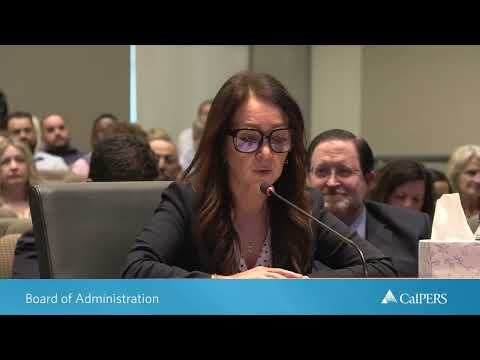
Staff at the California Public Employees Retirement System told an auditorium audience that the fund’s health‑plan team projects average premium increases of about 4.98% for 2027 while Medicare premiums are expected to remain essentially flat.
The presenter said the health division compares each insurer’s premium proposal to actual claims, requires actuarial certification and third‑party verification of rate projections, and declined a UnitedHealthcare increase this year that staff judged “unacceptably high and unsupported by our data.” The presenter said these data‑driven negotiations cover more than 1.5 million health plan members.
The presentation also included an overview of the investment organization’s work. “The most important thing that the investment team does of course is to invest the portfolio,” Steven Gilmore, identified as the chief investment officer, said when he introduced himself to attendees. Gilmore noted the fund’s goal is to generate strong risk‑adjusted returns so it can pay future pension benefits and said the system looks after the retirement benefits of about 2.4 million members.
Simis Zimma, head of global public equity, summarized the public equity team’s performance: “From a public equity perspective over the last 5 years, we’ve outperformed the index by 25 basis points on an annual basis. That may seem like a small amount when you’re talking basis points. That’s $2.4 billion cumulative over a 5‑year period.” Zimma told the audience the team manages roughly $220 billion in public equity assets.
Other investment leaders described asset‑class strategies: Anton Orlich, head of private equity, emphasized longer‑term horizons and company ownership that supports employment; an investment director in private debt (transcript reads as “Rel C”) reflected on decades of service; Bashar Zakaria described the emerging‑markets research process; Juan Gavia outlined real‑assets investments such as transportation and battery energy storage that aim to improve connectivity and grid resilience; and Peter Cashion said sustainable investment priorities include climate solutions and targeting emerging and diverse managers.
The presenter said the health‑team approach—using claims data, actuarial review and third‑party verification—is intended to prevent unjustified premium increases from being passed to members and that, for a third consecutive year, projected increases are lower than the prior year. The staff also announced a new video and blog posts introducing key investment‑team members and their work for members; the presenter said the video was posted that day.
No formal votes or board actions were announced in the presentation. Staff concluded by inviting questions and said the video is intended to be a first iteration of ongoing member communications.