Get Full Government Meeting Transcripts, Videos, & Alerts Forever!
Get email alerts on the Hartman Rock Garden topic
No spam. Unsubscribe anytime.
Hartman Rock Garden leaders unveil plan for visitor, education center as they tout the site’s history and tourism impact
Summary
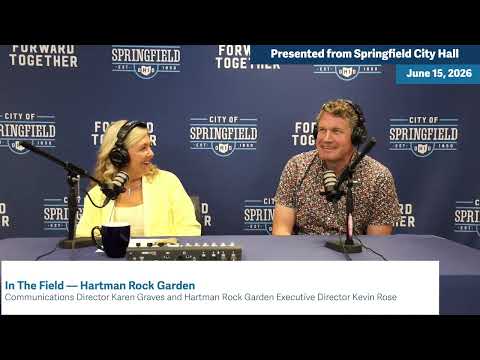
Kevin Rose, director of the Hartman Rock Garden, described the site’s Depression-era origins, conservation needs and the garden’s regional tourism role, and announced plans for a visitor and education center while fundraising continues.
Kevin Rose, director of the Hartman Rock Garden and a staff member at the Turner Foundation, outlined the sculpture garden’s history, conservation challenges and tourism role and said the site plans to add a visitor and education center to accommodate school groups and restore vulnerable features.
“Hartman is free. It’s always been free,” Rose said, describing the garden’s long tradition of open access while noting the site relies on donations, foundations and an endowment for upkeep. He estimated the garden’s operating cost at about $11 per visitor when spreading maintenance and conservation work across attendance.
The garden’s core works were created by Harry George “Ben” Hartman after he moved to Springfield about 1912, with most building happening between 1932 and 1944, Rose said. He added that Hartman’s widow, Mary Hartman, managed the site for decades and supported upkeep by selling plants from greenhouses that later became a source of descendants still found in the garden today.
Rose described two main conservation challenges: visitor contact (people leaning on or touching arches and rockwork) and freeze–thaw cycles that let moisture push behind stone and concrete, causing pieces to loosen. “You look at spots where people would put hands — that’s where a lot of the rocks fall away,” he said. The garden has hired a contracted conservator and is building an endowment to address ongoing needs.
Rose said the site draws a broad mix of visitors: roadside-attraction travelers, RV groups, international tourists, and people who pair Hartman with nearby cultural sites such as the Wescott House and the city’s murals. He estimated the garden hosts roughly 500 schoolchildren annually for field trips, but said the site’s small footprint makes group programming difficult.
To address that, Hartman’s leadership is planning a visitor and education center that would add restrooms, provide classroom space to accommodate school groups, and allow limited interior access to restored features such as Ben Hartman’s cathedral. Rose said fundraising is active but not yet complete and estimated — if fundraising succeeds on schedule — that construction could begin within about two years.
“One of the number one questions we get from people when they arrive is . . . do you have restrooms?” Rose said. He described the center as a way to improve the visitor experience while keeping site admission free.
Rose acknowledged uncertainty in some visitor metrics — noting a small survey that suggested lower local name recognition — but argued the site’s broader tourism impact is clear, with cross-visitation to downtown restaurants and other museums. He said the garden has a long history of community stewardship and philanthropic support, including a mix of large and mid-level donors that have supported conservation and operations.
The episode also touched on the role of public art and murals in Springfield’s cultural tourism strategy. Rose noted that high-quality murals and interpretive signage help communicate local history and complement destinations like Hartman and the Wescott House.
The garden will remain free to visitors, Rose emphasized, and its leadership is continuing fundraising for the planned center. For now, he urged listeners to visit: “If you haven’t been to the Hartman Rock Garden, what are you waiting on? It’s free.”
The podcast closed with a reminder that the visitor center plan is contingent on fundraising and that project timing is not finalized.