Get Full Government Meeting Transcripts, Videos, & Alerts Forever!
Get email alerts on the Wetlands Definition topic
No spam. Unsubscribe anytime.
Baldwin planning board weighs changing ordinance language so forested wetlands count as freshwater wetlands
Summary
At a town planning-board meeting, members debated whether to alter the shoreland zoning definition that currently reads "freshwater swamps, marshes, bogs and similar areas other than forested wetlands." Experts and board members disagreed on interpretation; the board agreed to seek state mapping guidance and revisit the question.
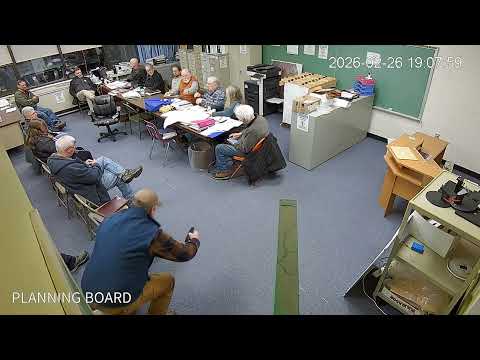
The Baldwin Planning Board spent the bulk of its meeting debating whether the town's shoreland/shoreline zoning definition should treat forested wetlands as freshwater wetlands and therefore as areas eligible for resource protection. Don, a planning-board member who presented the review, said applicants and the CEO had reached inconsistent outcomes because the town's ordinance language and its flood/wetland map did not read the same.
Why it matters: board members said the question affects which parcels could be developed and whether residents would face expanded growth near sensitive wetland areas. The discussion touched on public-safety and infrastructure costs, because allowing development on wet soils would increase runoff and likely require costly engineering measures.
Don told the board he overlaid the town's existing map with the National Wetlands Inventory and state maps and concluded the town map follows the federal/USGS line work; the immediate problem, he said, is an apparent mismatch between that map and a single sentence in the ordinance. That sentence, quoted in the review, reads in part: "freshwater swamps, marshes, bogs and similar areas other than forested wetlands." Several board members said some applicants have argued that language means forested wetlands are not "freshwater wetlands," and that has led to inconsistent permitting.
Sher Dunning, who introduced themself as executive director of the Saco River Corridor Commission and an ecologist, told the board their reading of the statute favors treating forested wetlands as freshwater wetlands. "As far as I can tell, it clearly does identify that forested wetlands should be considered a freshwater," Sher said, recommending the board also check the state's Chapter 1000/minimum standards and the Beginning With Habitat mapping used by state agencies.
Board members raised a mix of values and practical concerns: survey results from Baldwin's recent comprehensive-plan process (which the board reviewed during the meeting) showed strong public preference for keeping the town's rural character and prioritizing woodland and wildlife habitat. Several members said that public preference counsels caution about any change that could open larger areas to development. Other members emphasized the ordinance's legal clarity: one option discussed was striking the words "other than" so the town's freshwater-wetland definition explicitly includes forested wetlands and thus aligns with the mapping.
The board also discussed technical consequences: engineers at the meeting noted that developing forested wetlands increases imperviousness and runoff (raising downstream flood risk) and that any relaxation of protections would require clearer engineering review standards and additional town capacity to enforce them.
Next steps: members agreed to invite Beginning With Habitat/state mappers to present to the planning board and to circulate proposed ordinance edits before any vote. No ordinance change was adopted at the meeting; the item will return to a future agenda for further review and draft language.
The board adjourned after scheduling follow-up work on the shoreland definitions and mapping.