Career-technical center reports improved credentialing and prepares to switch to PowerSchool for clearer transcripts
Summary
The center reported stronger outcomes on industry credentials and college credit attainment; staff described program-by-program results and announced a transition from Jump Rope to PowerSchool so students will have transcripts that show embedded credits, IRCs, and college credits.
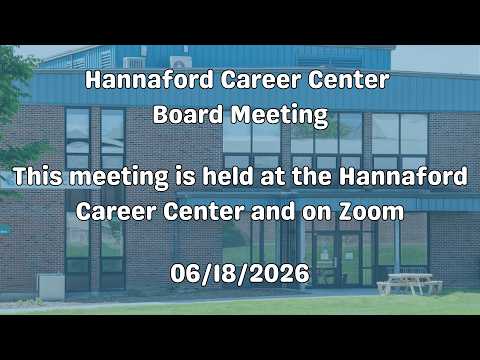
The Hannifford center presented its annual ENS education quality review and program-by-program performance metrics at the board meeting. "We had 200 technical students and 179 of them were concentrators this year," explained a program lead, and centerwide quality measures showed sizable attainment in credentials: 77.1% of concentrators earned at least one tier-1 industry-recognized credential (IRC), 65.4% earned at least one tier-2 IRC, 42.5% earned some college credit and 44.1% participated in work-based learning.
Jillian Zager, director of curriculum, walked the board through the program-level breakdown. Some programs (medical professions; diesel; advanced manufacturing) recorded high attainment across IRC and college-credit measures. Other programs showed structural limits: several technical programs do not offer dual-enrollment college credit because instructor credentialing requirements (adjunct requirements) prevent that; auto and diesel programs, for example, often provide IRCs but not dual enrollment in the current staffing model. Sustainable agriculture recently shifted its college-credit relationship to SUNY Cobleskill after the in-state partner changed its offerings; staff noted the district must pay for the out-of-state credit arrangement from program funds.
The board also heard an update on work-based learning expansion and a related hire: the board approved moving Jess Daniel to full-time as a work-based learning coordinator for one year, funded by a congressionally directed spending grant the center helped apply for with other CTE partners. "We went in together and wrote a grant, a congressionally directed spending grant to Senator Sanders... the group was successful with that grant," a staff member reported.
To protect students’ records and make embedded credits and IRCs visible to colleges and employers, staff announced a decision to transition the student information system from Jump Rope to PowerSchool. David Roberts will lead implementation, with a targeted readiness date in August. Staff said PowerSchool will allow production of detailed transcripts showing embedded technical credits, IRCs and college credits — information that was difficult to produce reliably under the previous system.
Board members raised questions about comparability of results year over year and about how special-education populations factor into standardized-test outcomes. Staff committed to providing more granular breakdowns to the board at future meetings and to continuing efforts to expand work-based placements.
AI generated
The text on this page is AI generated. Summaries, highlights, analysis, and video transcripts are all produced from the original source material.
AI can make mistakes, so if you spot one, and we will fix it for everyone.
Note: the source content is unaltered by us. Any content source we link to, be it a video, an audio recording, or a document, is presented exactly as its publisher released it. That publisher is usually a government body, sometimes an individual official or another organisation.