Get Full Government Meeting Transcripts, Videos, & Alerts Forever!
Get email alerts on the Subdivision topic
No spam. Unsubscribe anytime.
Applicant seeks waiver to place hammerhead turnaround past Rural Road terminus for Jericho Road subdivision
Summary
An applicant requested subdivision approval and a waiver to locate a hammerhead turnaround deeper on a Jericho Road parcel to avoid wetlands; staff noted the Rural Road standard technically ends earlier and recommended referral to the selectboard if the DRB grants the waiver. The hearing was continued to deliberation.
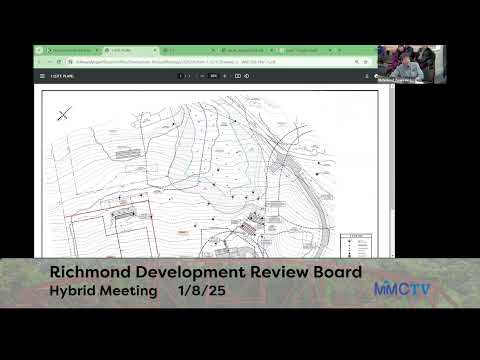
An applicant identified as David presented a preliminary plan to subdivide roughly 173 acres along Jericho Road to create a new lot and build a residence on the retained parcel, and requested a waiver to place a hammerhead (turnaround) beyond the technical end of the town’s Rural Road standard to avoid wetlands.
David told the Development Review Board that the property contains three existing homes and an additional parcel he calls parcel 5 to be subdivided, and that a wetlands area blocks the originally planned driveway alignment. "We discovered to our amazement that we had wetlands," he said, and explained the plan would instead use an historic track that avoids the wetland and places the hammerhead deeper on the parcel.
Scott Baker of Barron/Jarvis, the project consultant, described the hammerhead location as "more useful" because it serves more homes and sits in a natural, low‑impact spot on the site. He said the design avoids wetland disturbance and that the applicant intends to use Rural Road standards rather than full Town Road standards, an "election" the ordinance allows.
Town staff explained the regulatory issue to the board: the Rural Road standard in the town’s rules technically terminates before the proposed hammerhead location, so allowing the hammerhead where the applicant proposes would normally require a waiver. Staff described the waiver procedure as two steps: DRB determination and subsequent selectboard approval before final permits proceed.
Members of the public raised procedural and substantive questions. Bradley H. urged the board to review the original subdivision permit history (1987, 2006) to determine whether any conditions must be carried forward or whether the matter should be treated as a subdivision amendment rather than a new application. Chelsey Brooks and others asked about wetlands delineation timing and whether state wetland permits will be required; the applicant said a wetlands expert completed a delineation and that state verification is scheduled for spring. David also said a state wastewater permit for the proposed homes was issued that day.
Staff said site‑distance review and fire/rescue access checks are typically performed at the access permit stage and that the selectboard must ultimately sign off on any rural‑to‑driveway standard election. The board did not vote on the waiver at the preliminary hearing; after public input the board moved to close the hearing and enter deliberative session. The motion passed "all in favor." The DRB has up to 45 days to issue a decision.
What happens next: staff will compile outstanding technical items (wetland verification, confirmed permit history, engineered stormwater documentation and final survey), and the DRB will deliberate with those materials. If the DRB favors the waiver, the matter will then go to the selectboard for that second required approval before final plat recording or access permitting.