Get Full Government Meeting Transcripts, Videos, & Alerts Forever!
Get email alerts on the Large Load Show Cause Orders topic
No spam. Unsubscribe anytime.
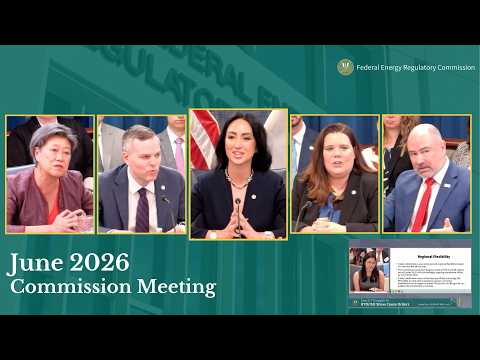
FERC opens landmark show‑cause proceedings for six RTOs over large‑load interconnection rules
Summary
The Federal Energy Regulatory Commission unanimously voted to issue six show‑cause orders directing each regional grid operator to justify or revise tariff rules governing interconnection of very large loads — including hyperscale data centers — and gave regions 60 days to respond. Staff estimated the orders touch roughly 200 million customers across more than 30 states.
The Federal Energy Regulatory Commission on Friday opened tailored show‑cause proceedings directing each of six regional grid operators to explain why their tariffs remain just and reasonable in the face of rapidly growing "large loads," such as hyperscale data centers, or to file tariff changes within 60 days.
Chairman Sweat, detailing the initiative, said the show‑cause orders respond to issues raised in the ANOPER docket and seek five core reforms: clear transmission application and study rules for customers serving large loads; protections against unfair cost‑shifting and greater transparency about network upgrade costs; clarified rules for collocation and use of behind‑the‑meter generation; new transmission services for flexible large loads; and pathways to study generation that will serve electrically‑approximate loads on a more limited basis. "Today, we are taking historic action to push our country's electric markets and economy into the future," the chairman said, urging regional filings that respect state authorities and existing commercial agreements.
Why it matters: Staff told commissioners the orders cover regionally tailored show‑cause proceedings for PJM, MYSO, SP, Kaiso, ISO England and NISO and affect roughly 200 million Americans in over 30 states. The orders are designed to speed "time to power" while protecting reliability and preventing retail customers from bearing costs induced by speculative or abandoned projects.
What the orders require: The draft documents require RTOs/ISOs and certain transmission owners to respond within 60 days, provide informational reports within 30 days on how they will ensure adequate generation, and answer briefing questions within 60 days. Parties may seek forbearance of all or part of the orders and requests to extend the response deadline; stakeholders may file comments on regional filings.
Commissioners framed the reforms around consumer protection, reliability and innovation. Commissioner Rosner summarized the approach as four pillars — "protect consumers, safeguard reliability, enhance transparency and foster innovation" — and urged use of grid‑enhancing technologies and stronger study criteria to avoid unnecessary transmission buildouts. Commissioner Chang stressed the need for a thorough record in each regional docket and sought more evidence on whether non‑firm or minimal‑use transmission customers should pay a separate charge in certain regions.
Votes at a glance: The commission unanimously approved items E7–E12 (the six RTO/ISO show‑cause orders). The consent agenda (E2–E6, M1, H1, C1–C3) also passed; Commissioners noted individual concurrences and a recorded dissent by Commissioner Chang on E6 (MYSO demand‑response tariff revisions).
Staff presentation and scope: Staff presenters (Sarah Leaden, Emily Chen and Jason Foyerstein) told the commission that the new procedures are intended to be regionally tailored and that the draft show‑cause orders focus on the five reform categories described above. Staff said the orders cover nearly two‑thirds of customers served under FERC‑jurisdictional rates and invited public utilities outside RTO/ISO footprints to submit section 205 proposals informed by the ANOPER work.
Dissent, concurrence and next steps: Commissioners filed separate concurrences and dissents that will appear on the dockets. The order allows the RTOs and ISOs to explain compliance, propose tariff changes under FPA section 205, or seek forbearance; the commission said it expects robust regional records and will monitor implementation closely.
What to watch next: Each RTO/ISO’s response and any 205 proposals or stakeholder filings in the six regional dockets over the coming 60 days. The orders also require reports that will show how regions plan to preserve reliability while integrating new large loads.
Closing: Commissioners praised staff work on the complex record and urged state regulators, stakeholders and operators to engage in the regional proceedings. The meeting ended with a unanimous vote to initiate the show‑cause proceedings and routine closing remarks.