Get Full Government Meeting Transcripts, Videos, & Alerts Forever!
Get email alerts on the Enforcement Vacate topic
No spam. Unsubscribe anytime.
FPPC denies motion to vacate default in Sevonna Evans enforcement case
Summary
The Fair Political Practices Commission on June 18 denied a motion to vacate a default decision in the enforcement matter involving Committee to Elect Sevonna Evans, rejecting counsel’s request that hardship and late counsel retention justify reopening the case for an evidentiary hearing.
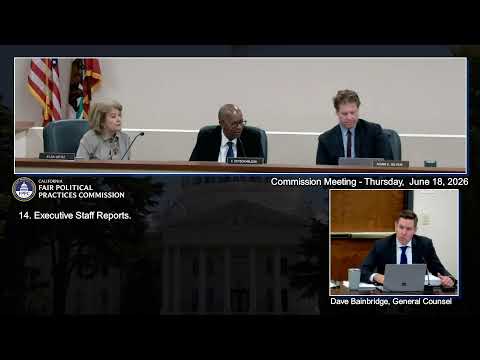
The Fair Political Practices Commission voted June 18 to deny a motion to vacate a default decision in the matter involving Committee to Elect Sevonna Evans.
General Counsel Dave Bainbridge told the commission that the question before it was procedural: whether the respondent had shown inadequate service or "mistake, inadvertence, surprise, or excusable neglect" under the Administrative Procedure Act to justify vacating the March default. Bainbridge said the merits of the underlying allegations were not before the commission at this stage.
Counsel for the respondent urged the commission to grant the motion, saying the failure to respond stemmed from "serious personal, medical, and family hardships, including cancer treatment, surgery, recovery, domestic instability, and disruptions with COVID-19," and that the client had since retained counsel and sought to address the violations on the merits.
Chief of Enforcement Kendall Boonbrake summarized enforcement's position, saying staff had provided an email that appeared to show the respondent reviewed the accusation packet and had chosen not to file a notice of defense. "Given those facts, we would ask that the petitioner's motion not be granted today," Boonbrake said.
Commissioner Ortiz pressed counsel and staff on the timeline and facts, noting prior campaign activity during the pandemic and observing that the respondent "admitted...to receiving the accusation and chose not to respond." Other commissioners expressed concern that the record did not meet the statutory standard for excusable neglect and emphasized the burden on enforcement staff in preparing these cases.
Chair Silver moved to deny the motion to vacate the default; the motion was seconded and approved by the commission. The default decision and order therefore remain in place; if enforcement pursues further proceedings, the matter would move forward under the existing default outcome unless changed by a later commission action.
The commission's action was procedural: it declined to reopen the prior default. Enforcement and the respondent retain their procedural rights under the Political Reform Act and related administrative rules to pursue the matter further, subject to applicable deadlines and procedures.