Get Full Government Meeting Transcripts, Videos, & Alerts Forever!
Get email alerts on the Budget topic
No spam. Unsubscribe anytime.
Metro Nashville presents FY2027 operating budget with $9 million grocery tax cut and large boost to housing
Summary
Metro Nashville’s recommended FY2027 operating budget reduces local grocery taxes by about $9 million, increases local housing affordability spending by roughly 150%, creates a subordinate debt product to seed an affordable housing bond, and funds a pay plan for Metro employees; officials held a signing ceremony but no vote was recorded in the transcript.
Metro Nashville officials presented a recommended operating budget for fiscal year 2027 that includes a local grocery tax reduction they said will amount to about $9 million in near-term relief, a substantial increase in local housing affordability spending and funding for a pay plan for Metro employees.
The presentation, delivered during a Metro Nashville Network session, framed the budget as the product of months of work by the finance department, council leaders and staff. Finance Director Janine Reed and Budget Director Erin Pratt were identified as key staff involved in developing the recommendation. Officials said slower revenue growth required “tough decisions” but that the proposal preserves core priorities including schools, services and public safety while adding an affordability framework focused on housing.
The budget would reduce grocery taxes at the local level for all Nashvillians, described in the presentation as roughly $9 million in nearly immediate economic relief. It also directs the largest local spending to date for housing affordability, the presenters said, describing a nearly 150% increase in local housing investments compared with the prior baseline. The plan allocates several million dollars to a subordinate debt product the administration said it hopes will grow into a durable affordable housing bond, and it increases local contributions to the Barnes Affordable Housing Trust Fund.
Officials also highlighted that the full recommended budget includes funding for a pay plan approved by the Civil Service Commission, which the presentation characterized as an important step to shore up wages for Metro’s workforce and support overall affordability in Nashville.
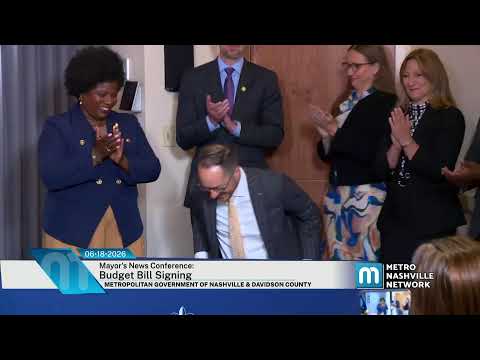
The presenters credited collaboration with Metro Council leadership and committee chairs — specifically praising Chair Toombs and Vice Chair Jason Spain — for incorporating public-hearing feedback and council member priorities into the recommended package. After the presentation, the host invited guests to come forward to sign the budget in a ceremonial step; the transcript records applause but does not include a formal roll-call vote or recorded vote tally.
The presentation closed with a reference that the session was provided as a service of the Metro Nashville Network and a direction to nashville.gov for more information and program materials.
Next steps: the presenters indicated two items would be handled together — the budget bill and the grocery tax reduction — and proceeded to a signing ceremony. The transcript does not show a recorded vote count or a committee motion in the excerpt provided.