Get Full Government Meeting Transcripts, Videos, & Alerts Forever!
Get email alerts on the Budget topic
No spam. Unsubscribe anytime.
Prosser School District faces $380,000 shortfall, board weighs $330,000 in savings and deeper MSOC cuts
Summary
District staff told the board the 2026'27 budget projects a $380,000 operating gap (and approximately $1.3 million needed for reserve targets). Presenters identified $330,000 in planned savings and proposed further cuts to MSOC (materials, supplies and operations), position reductions and building budgets.
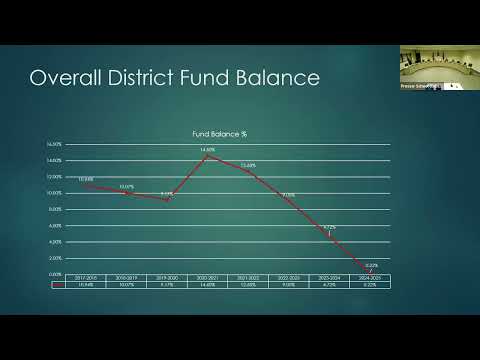
Prosser School District staff told the board on June 10 that projected 2026'27 expenses total about $45.36 million against current revenue projections, leaving an operating shortfall of roughly $380,000 and a longer-term need to close about $1.3 million to meet reserve targets.
Drew, who presented the budget review, said multiple factors drove the gap: declines in days of cash on hand (the district fell from approximately 39 days in 2020'21 to about five days recently), timing of payments that shifted expenses from one fiscal year to another, and persistent shortfalls in MSOC (materials, supplies and operating costs). "As a state, we're not even hitting it," Drew said of the OSPI/auditor recommendation for 60'90 days cash on hand, and he warned MSOC is the district's largest deficit area.
Staff identified two programs with major shortfalls this year: food services (about $600,000 underfunded) and an additional program short approximately $250,000, and noted several building budgets showed overspends driven by misallocated expenses. Drew said insurance costs alone had risen roughly 97% over five years and that substitute-teacher costs outpaced what the state funds (the district recorded about $480,000 in substitute costs versus roughly $70,000 the state provided in one year).
To reduce spending for 2026'27, the district cataloged about $330,000 in savings already identified, including staff attrition/non-renewals (~$1.9 million in staffing savings overall projected for next year across categories, with ~ $330,000 allocated in current cuts), vendor and software changes (switching to lower-cost platforms), reductions in some contracts (food service cuts already trimmed $50,000 and more proposed), and operational trims such as reduced printer-cartridge payments and copier adjustments. The presenter said additional ideas under consideration include not filling some open positions (with statutory exceptions for special-education or required roles), reducing building budgets from about $64.56 per FTE to $14 per FTE (estimated $120,000 savings), and eliminating one principal or vice-principal position (estimated $166,000 savings) if staffing can be reorganized internally.
Board members requested more granular MSOC analysis before deciding on cuts and asked staff to prepare fiscal trade-off analyses (for example, whether not filling a teacher position could trigger loss of K3 funding or create more overload costs). The board scheduled a focused MSOC study session in late July to compare line items with similar districts and invited community input on priorities and potential revenue ideas.
The board discussed selling property as a one-time fix if the district ever enters binding conditions under OSPI (such a sale requires petitioning OSPI and cannot be repeated frequently), and asked staff to present comparisons and a clearer MSOC breakdown at the next study session. The meeting closed with the scheduling of a June 24 regular meeting and the MSOC study session planning.