Get Full Government Meeting Transcripts, Videos, & Alerts Forever!
Get email alerts on the Parks And Environment topic
No spam. Unsubscribe anytime.
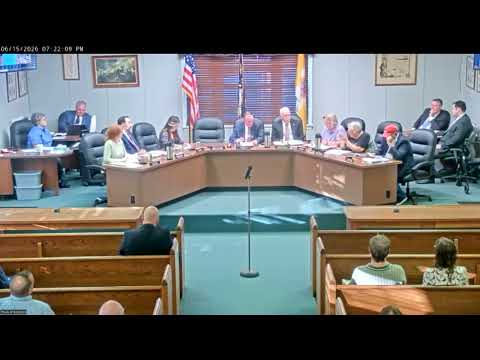
Boonton Main Street outlines multiyear plan to restore Canal Side Park with native gardens
Summary
Boonton Main Street presented a volunteer-led, multiyear plan to remove invasive species and install native plantings along Canal Side Park’s Main Street slope, seeking town support for water access and continuing grant funding; work will be done zone-by-zone starting with a 2026 target for Zone One.
Boonton Main Street on Monday laid out a multiyear restoration plan for Canal Side Park that aims to replace invasive vines and monocultures with native and noninvasive plantings, create a butterfly garden and year-round seasonal interest, and stabilize slopes near Main Street.
The presentation, led by Mandy DeNezio, a Boonton resident and leader of the Boonton Main Street (BMS) design team, said the work will proceed zone by zone along roughly 1,000 linear feet of park and run from the current season through at least 2028. The group identified a 2026 goal to reclaim the zone adjacent to the Plane Street parking lot as its first major deliverable.
"We're going to work in zones because the park is so long," DeNezio said, adding the effort is volunteer-led and that BMS seeded the project with $5,000 and recently received a $3,000 grant from the NJ Highlands Coalition. She said the group has town permission and a certificate of insurance in place.
Daryl Jones, a former Boonton resident who has worked with the Morris County Park Commission, described invasive-species targets and a two-summer mechanical control approach that emphasized minimizing herbicide use. The team used a solarization technique — cutting back vegetation and covering slopes with clear plastic tarps to heat and suppress plant regrowth and, where possible, reduce the seed bank — followed by rye seeding to stabilize soil and block invasives while beds establish.
"Some really aggressive vines were creating a monoculture; we had to kind of wipe the slate clean," Jones said, noting species of concern included Japanese honeysuckle, black swallow-wort and Ailanthus (tree-of-heaven), the latter being a preferred host for the spotted lanternfly.
Landscape architect Kyle DeVecchio described a design focused on woodland-edge plantings and massed native swaths so different species bloom across the seasons. The plan calls for fall plantings when possible to reduce initial watering needs and for dense groupings of species (five to 15 plants) to build visual impact and ecological function.
The presenters asked the town for two practical supports: (1) patience and goodwill given the multiyear nature of the work, and (2) access to water via a hydrant meter from Boonton Sewer and Water so volunteers can irrigate plantings during establishment. DeNezio said the BMS account can accept earmarked donations and that volunteer sign-ups are posted on the BMS website and social channels.
Council members pressed the team on maintenance and watering needs. DeVecchio acknowledged early maintenance — particularly hand weeding — will be labor-intensive after solarization, but said the use of rye and fall planting should limit summer watering. "Our goal is to be as straightforward and economical about this and minimize impact to the town," he said.
Project leaders said roughly 90% of the priority zone has been remediated and that planting will begin once they remove temporary rye cover. The team also described outreach to partners including the town Green Team and continuing grant applications to support later phases.
The project timeline, volunteer model, early grant amounts and a formal request for hydrant-meter access were presented as next steps; the presenters offered to return with any follow-up materials requested by council or staff.
What happens next: BMS will continue remediation and plant procurement, pursue additional grant funding, and coordinate a formal request with Boonton Sewer and Water for hydrant-meter access to support initial establishment watering. Volunteers are invited via the BMS website.