Get Full Government Meeting Transcripts, Videos, & Alerts Forever!
Get email alerts on the Invasive Species Management topic
No spam. Unsubscribe anytime.
Commission backs $16,050 treatment for Delcar pond invasive water chestnut after debate on frequency and testing
Summary
After extensive discussion about annual chemical treatments versus additional monitoring, the commission approved a $16,050 contract with Solitude Lake Management to treat invasive water chestnut at Delcar Conservation Area and directed staff to run additional water-quality tests at the town lab.
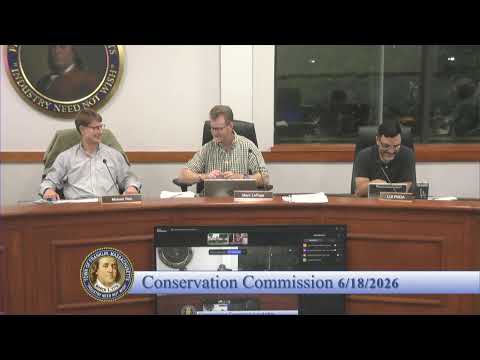
The Franklin Conservation Commission voted on June 18 to hire Solitude Lake Management for Delcar Conservation Area pond management to address invasive water chestnut, approving a $16,050 contract after a lengthy conversation about alternatives.
Commissioners debated whether the town should continue annual chemical treatments or lengthen intervals to reduce chemical inputs. Several members said the program had produced progress over 10–11 years of treatment but questioned whether skipping a year would lead to larger blooms requiring more treatment later.
Staff noted the contractor’s scope includes pre‑management vegetation inspection, a year‑end report and some water-quality measures (turbidity and concentration) but that nutrient testing (phosphate, nitrate) is not part of the standard package. Commissioners requested the town’s water treatment lab perform additional nutrient testing to better understand drivers of invasive growth; staff agreed to coordinate that testing and incorporate results into future discussions.
Matthew Stults moved to approve the $16,050 expenditure for Solitude Lake Management’s Delcar pond management contract; the motion passed by voice vote. Commissioners asked staff to retain enforcement oversight and to monitor outcomes at the end of the growing season.
What happens next: Solitude Lake Management will perform the contracted treatments and monitoring; town staff will obtain additional water-quality analysis from the municipal water‑treatment lab to inform future treatment frequency and approaches.