Get Full Government Meeting Transcripts, Videos, & Alerts Forever!
Get email alerts on the Surveillance topic
No spam. Unsubscribe anytime.
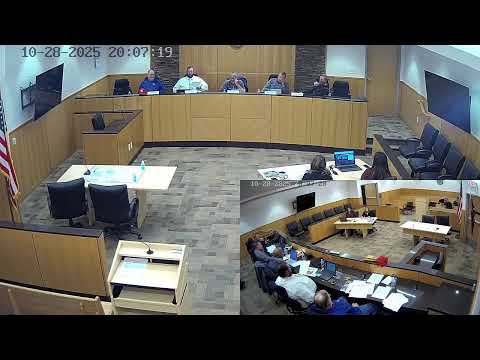
Resident urges Rangely council to end Flock Safety license-plate reader contract, cites privacy concerns
Summary
At the Oct. 28 meeting, resident Mark Stamus urged the Rangely Town Council to review or terminate the town's contract with Flock Safety, saying the vendor's cloud-hosted license-plate readers create searchable vehicle "fingerprints" that threaten privacy and may violate the Fourth Amendment; councilors requested specific local evidence and encouraged public engagement.
Mark Stamus told the Rangely Town Council on Oct. 28 that Flock Safety license-plate readers installed in town were put in place without meaningful public input and create a searchable cloud database that tracks vehicles and can be aggregated into "vehicle fingerprints." He warned the system could be used to profile citizens and argued the database's use without warrants raises Fourth Amendment concerns.
"These flock license plate readers are more than license plate readers. They read the license plate of every car passing one of the cameras in and out of town," Stamus said, adding that the vendor stores analyzed data in a cloud database "even if the vehicle or its driver is not suspected of any crime."
Council members acknowledged the concerns but pressed for local, verifiable evidence before taking formal action. Todd Thane, one of the councilors who spoke during the exchange, asked for documentation that would show real local impacts such as the number of stolen plates recovered in Rangely, arrests tied to Flock data, or instances of false hits.
"Show me the evidence," one councilor said during the discussion, reflecting a recurring request from council members that went beyond opinion pieces and national reporting. Several councilors noted that the cameras had been discussed on prior agendas and that the town had budgeted for them; others said cloud storage is generally more secure than the town's own servers but conceded that no system is immune to breach.
Don Davidson thanked Stamus for bringing the issue forward and said he appreciated the public's engagement. "Thanks Mark for being proactive," Davidson said, and urged continued information-sharing between the resident and town staff.
Council comments showed a clear split in emphasis: some members highlighted the potential privacy risks and future aggregation of data into a mass-surveillance system, while others focused on the public-safety benefits, noting the cameras have been cited by law enforcement elsewhere for recovering stolen plates and locating missing people. "If it saves one child, it's worth it to me," one councilor said, summarizing the safety-first argument voiced at the meeting.
Stamus asked the council to review the documents he provided and to consider a resolution to end the contract or, at minimum, to hold public hearings to gather broader community input. Councilors encouraged him to meet directly with Chief Hamlet and to return with local evidence and organized public support if he wanted policy change.
What happens next: Council members asked staff and the commenter to follow up. No formal motion to change the contract was made at the meeting; councilors said they would rely on any additional evidence and constituent input before considering a resolution or contract action.