Get Full Government Meeting Transcripts, Videos, & Alerts Forever!
Get email alerts on the Emergency Communications Tower topic
No spam. Unsubscribe anytime.
Naugatuck zoning commission approves 160‑ft emergency communications tower at Delgado Memorial Field
Summary
After hearing life‑safety testimony from police, fire and EMS, the commission approved a special permit for a 160‑foot emergency communications tower at Delgado Memorial Field, imposing landscaping, utility and construction conditions and delegating final screening plans to staff.
The Naugatuck Zoning Commission voted to approve a special permit to construct a 160‑foot emergency communications tower at Delgado Memorial Field, on borough‑owned property off Osborne Road.
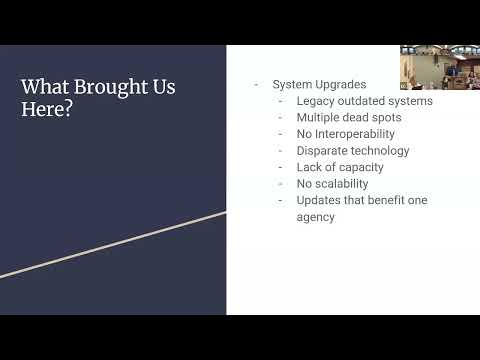
Attorney Ken Baldwin presented the application and introduced the project team, which included consultant Matt Cohen and engineer Tom Johnson. Cohen told the commission the borough’s legacy radios and isolated technology bands create “multiple dead spots” that limit interoperability among police, fire and EMS and that joining the Connecticut statewide land mobile radio network was the most effective solution to meet the borough’s public‑safety needs.
“Everything that I just mentioned doesn't happen for Naugatuck EMS in the borough,” Chief Kyle Kelly said in testimony, recounting times crews had to leave a patient’s side or have a bystander call 911 because portable radios failed inside buildings. “These are literally life and death scenarios,” he said.
Presenters showed modeling and heat maps the record describes as validated by Motorola Solutions; the applicant said the proposed site would achieve the project’s portable‑coverage objective (a modeled street‑level/portable coverage target described in the presentation as a 95% population standard in populated areas). Matt Cohen and counsel repeatedly told the commission modeled ground exposure would meet FCC public‑exposure limits: “it will meet the FCC established standards for safe exposure,” the team said in response to health questions raised by neighbors.
Neighbors raised concerns about visual impact, property values, wildlife and health effects. A resident who lives near the ballfield asked whether cell carriers could add antennas later; the applicant said no carriers have expressed interest now but acknowledged that co‑location is possible under state sharing policies and would require additional approvals.
Tom Johnson, the project engineer, described the proposed compound as roughly 50 by 80 feet with a buried concrete foundation for equipment cabinets and a single‑shaft 160‑ft steel monopole carrying both radio antennas and microwave dishes. He detailed erosion controls, an underground utility corridor, a motion‑activated site lighting approach and a fenced compound screened with privacy slats and plantings.
Commissioners and staff pressed for neighbor protections. The commission’s approval included a list of conditions read into the record by a commissioner and entered on the record; among them: (1) an applicant‑led pre‑construction meeting with borough land‑use and engineering staff; (2) a final as‑built plan submitted for acceptance on construction completion; (3) recording the special‑permit approval on the land records within 90 days; (4) utility placement at depths that protect future parking construction; (5) borough engineering approval of the access, design and drainage details; (6) proposed screening plantings installed at a minimum initial height of 6 feet; (7) a locked perimeter fence and slatting; (8) construction fencing located so the ballfield’s parking can remain usable during games; and (9) delegation to town staff to finalize and approve additional landscape/tree plantings to increase screening where feasible.
A commissioner framed the decision around the legal standard: balancing roughly 25 homeowners’ aesthetic concerns against the stated safety benefits to the borough’s population and emergency responders. The motion passed; the public transcript records the motion, the enumerated conditions, and the chair calling for the vote with the entry “All in favor.” A roll‑call tally did not appear in the public hearing transcript.
The commission delegated to staff the technical responsibility to finalize the landscaping plan to maximize near‑term screening and to monitor construction compliance with the listed conditions. The applicant estimated about three to four months for tower construction and 12–18 months for delivery and installation of the radio system equipment.