Get Full Government Meeting Transcripts, Videos, & Alerts Forever!
Get email alerts on the Historic Preservation topic
No spam. Unsubscribe anytime.
Council approves $51,000 metal roof for 1803 House after historic-commission recommendation
Summary
The council unanimously approved replacing the 1803 House roof with a standing-seam metal roof, following the historic commission’s recommendation and the Friends of the 1803 House board’s fundraising of roughly $51,000. Members debated historical authenticity and longevity before voting 7–0.
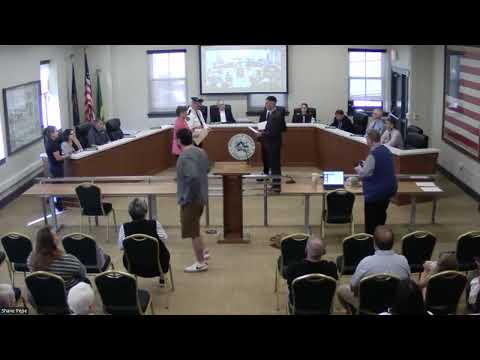
Emmaus Borough Council voted unanimously June 15 to approve a standing-seam metal roof for the borough-owned 1803 House after a presentation from the Friends of the 1803 House and the Historic Commission.
Marian Schneck, president of the 1803 House board, told council the board researched three options—standing-seam metal, synthetic cedar shake, and real cedar—and recommended the metal roof after soliciting estimates and consulting preservation guidance. She said the board has raised about $51,000 toward the project and that the metal option offers the longest life span and local vendor availability.
Councilors discussed historical appropriateness and lifespan. Several members said the metal roof would better protect the building for decades, while others noted synthetic shake more closely resembles historic appearance. Allison Hudac, a board member, said the house’s architectural evolution means multiple roof materials have existed over time and the board sought a balance of preservation and durability.
After discussion the council approved the metal roof replacement by voice vote; the motion passed 7–0.
Why it matters: the 1803 House is a historic asset in Emmaus, and the council’s decision commits borough resources and oversight to a capital preservation project. The board presented funding raised by private donors and community outreach; council members emphasized the need to move quickly to protect the structure’s interior and historic fabric.
What happens next: the borough will authorize the contractor to proceed and the Friends of the 1803 House will continue fundraising and coordinate installation details with borough staff and the Historic Commission.