Get Full Government Meeting Transcripts, Videos, & Alerts Forever!
Get email alerts on the Land Use topic
No spam. Unsubscribe anytime.
Council narrows proposed PCA zoning changes, bars 40‑foot lots on first reading after public pushback
Summary
After public opposition to small-lot subdivisions, council amended the first‑reading PCA code/map update to require 50‑foot minimum lot widths and removed a pocket labeled 'up to 16 units/acre'; the ordinance returns for second reading with those conditions.
Port Orange — The City Council took a key first‑reading vote on a long‑running code update for the PCA (planned community annexation) district, amending a developer‑sponsored map and text change to remove a proposed 40‑foot‑minimum single‑family lot standard and to strip a small map pocket previously labeled 'up to 16 units per acre.'
Planning staff presented the draft ordinance and map changes describing a market-driven proposal to shift roughly 240 acres from a workplace/office designation to a community/residential designation while retaining the original development caps and trip cap that were established in a 2002 interlocal agreement. “We weren’t changing that mix of uses that was always envisioned,” planner Tim Burman told council while outlining the updates to the zoning text.
The applicant team — represented by attorney Mark Watts and VCOR Property Management — said the changes are intended to reflect current market conditions, enable a mixed community district near the town center and preserve overall maximums. Watts emphasized the applicant’s intent to protect the caps and the trip‑cap limits and said the 40‑foot lot request was meant to enable certain smaller‑lot products adjacent to civic open space and town‑center uses.
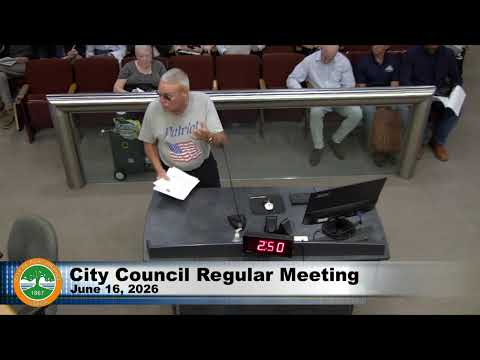
Public commenters were strongly opposed to narrower lot widths and new pockets of density. Port Orange resident Adam Dovy called the proposal “lipstick on a pig,” arguing the change would increase congestion and stress existing infrastructure such as Williamson Boulevard. Multiple residents and some council members said narrow 40‑foot lots and close spacing had created traffic, parking and emergency‑access problems in other neighborhoods and urged the council to preserve local scale.
In the face of the public opposition, councilmembers amended the ordinance on first reading to require a 50‑foot minimum lot width in the community district and to remove the localized 16‑units/acre designation from the map (while leaving the town‑center allowances intact). The motion to advance ordinance 2026‑8 with those changes passed on first reading; the ordinance will return for a second reading with the edits.
Why it matters: The code change covers a large, long‑held family‑owned land parcel near I‑95 and Williamson Boulevard and will shape the type and density of future development. The council’s amendments reflect local resistance to small‑lot subdivisions and a preference among several members to keep lower densities outside of the town‑center core.
Ending: The ordinance 2026‑8 advanced on first reading with council direction to the applicant and staff to refine the text and map to preserve 50‑foot lots in the community area and remove the 16‑units/acre pocket before the final vote.