Get Full Government Meeting Transcripts, Videos, & Alerts Forever!
Get email alerts on the Municipal Finance topic
No spam. Unsubscribe anytime.
Stifel presents 10-year bond and bank-note options to finance up to $10M in road work
Summary
Underwriters from Stifel told the Anniston City Council that a 10-year financing term—either a fixed-rate public bond or a 10-year bank drawdown note—would be cheaper over time than a 15-year wrapped bond, potentially saving roughly $2.2 million in interest in the example shown.
Stifel, a municipal underwriting firm, told the Anniston City Council it had modeled multiple ways to finance about $10 million of road repairs and recommended a shorter 10-year financing term as the most cost-effective option.
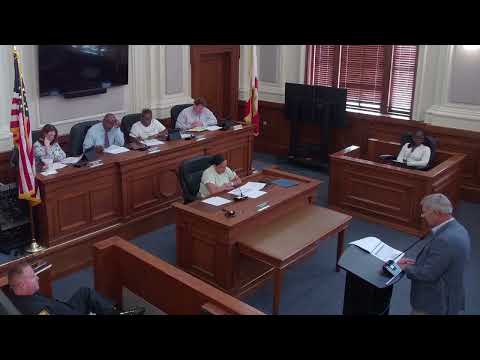
Ken, a Stifel public-finance banker, presented side-by-side examples showing a 10-year public bond, a 10-year bank drawdown note and a 15-year wrapped bond. "What we say it is, we think you can afford it to go with the 10 rather than 15," Ken told council members, noting that the shorter term tends to be viewed more favorably by rating agencies and the market for road projects.
Baker Ellis, a Stifel underwriter who opened the presentation, framed the firm's experience before the numerical review: "We are the number one underwriters in the country of municipal bond issues," Ellis said, then turned the detailed scenario work over to Ken.
The scenarios in Stifel's slides showed a roughly $2.2 million interest difference in the examples presented when comparing a 10-year financing to a 15-year wrapped structure. Ken also explained a bank drawdown note, in which the city borrows and draws funds as paving progress requires, as an alternative that can reduce interest payments on undrawn funds during construction months.
Council members asked whether the city's Rebuild Alabama receipts (a 4% or 7% fuel-related allocation mentioned in the materials) could be pledged to back debt service; Stifel said municipalities sometimes pledge those receipts as a revenue source for bonds or structure a revenue-based transaction when coverage is sufficient rather than a full faith-and-credit pledge.
Stifel told the council it would return in a few weeks to request appointments related to the proposed business improvement district financing that Stifel is also working on and said the firm could assist if the council chose to proceed with an $8 million public issue tied specifically to the road project.
Next steps: Stifel will follow up with staff on technical requirements and return to the council with appointments and documentation if the council wishes to advance a bond or bank financing option.