Get Full Government Meeting Transcripts, Videos, & Alerts Forever!
Get email alerts on the Renewable Energy topic
No spam. Unsubscribe anytime.
Solar firms pitch ~245 kW array for Maxwell water plant; estimate $400K purchase, quick payback
Summary
At a Maxwell council workshop, solar-company representatives outlined a roughly 245 kW ground array for the city's water treatment plant, described procurement options (direct purchase vs. PPA), warned of federal compliance windows, and estimated a $400,000–$420,000 purchase price with a roughly 4–5 year payback under the 30% federal direct-pay credit.
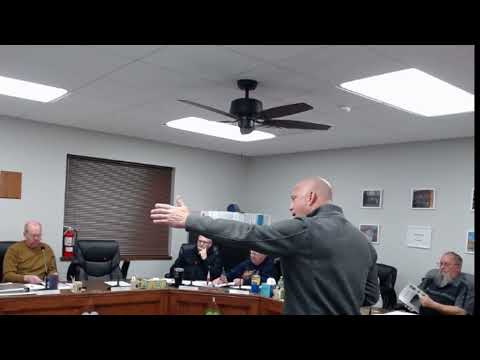
Representatives from One Source Solar and a local solar developer presented a proposed ground-mounted solar array for Maxwell’s water treatment facility during the council’s budget workshop, saying the system could replace roughly 338,000 kilowatt‑hours a year of the plant’s electricity use and materially cut the city’s power bill.
The presenters told the council the candidate layout would be roughly a 245-kilowatt system (about 560 solar modules in their design) and that a direct purchase would allow the city to capture the federal investment tax credit (ITC). “If you buy it outright, you get 30% of that system cost back in the form of a check in the form of direct pay,” the One Source Solar representative said, urging the city to consider timing to preserve that credit.
Why it matters: The presenters said the water plant is a strong candidate because its steady usage can be largely offset by solar generation; under the company’s upfront estimates, a direct purchase would cost roughly $400,000–$420,000 and showed a projected payback horizon in the “just under four years to just under five years” range after the direct-pay credit. The firm also described a PPA (power‑purchase agreement) alternative under which a third party would own the system, take tax credits and depreciation, and sell power to the city at a fixed, discounted rate (the presenters offered an example starting in the low‑to‑mid teens cents per kWh with a small annual escalator).
Key technical and policy details: The presenters flagged several constraints that affect sizing and procurement: inverter and transformer capacity (the proposed site was limited by a 150 kVA inverter cap in the current layout), and federal ‘‘Buy American/FTA’’-style compliance for modules and inverters that will affect which panels qualify for the ITC. They recommended a safe‑harbor approach tied to federal timelines (work contracted Jan. 1–July 3 retains more flexible build windows; projects contracted after July 4 may face shorter build-by deadlines) and suggested making a modest initial deposit to “safe harbor” a project if the council wanted to preserve the credit while buying time for construction.
Company commitments and operations: One Source Solar said it performs engineering, procurement and construction in house, offers a five‑year workmanship warranty that covers truck rolls and service calls in the warranty window, and provides active remote monitoring of production. The presenter offered to provide the council with redacted budget numbers and a site layout by email and to follow up with a formal RFP-ready package.
Council follow-up: Council members asked staff to review financing options, including the city’s bonding capacity and whether water‑related loan programs (SRF or similar) could help fund a municipal purchase. Staff agreed to check bonding limits and to circulate the presenters’ design and cost materials for further review.
What the presenters said (selected quotes): “We’ve been in business for 11 years … we handle all the engineering, procurement, the design and construction with in‑house installation crews,” the presenter said during the layout briefing. On the federal credit: “You’ll get 30% of that system cost back in the form of a check in the form of direct pay.”
Next steps: The presenters will send the council the site design and budget estimates; city staff will review bonding and financing options and report back at a future meeting so the council can decide whether to pursue a city‑owned purchase or a third‑party PPA.