Get Full Government Meeting Transcripts, Videos, & Alerts Forever!
Get email alerts on the Land Use Data Centers topic
No spam. Unsubscribe anytime.
Resident urges moratorium on data centers as judge and county attorney outline limits and planning steps
Summary
A resident asked the Barren County Fiscal Court to impose a moratorium on data centers; Judge Executive Jamie Buie Bird and county attorney Mike Richardson responded that, without county zoning, a legally enforceable moratorium is unlikely and described upcoming trainings and town halls to inform next steps.
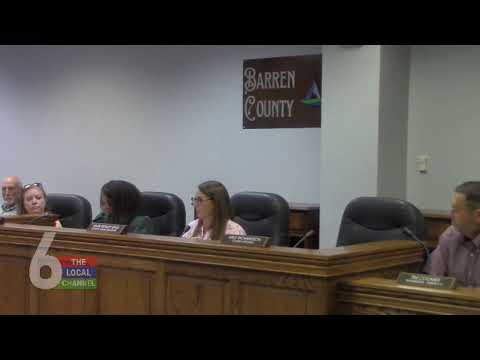
A resident urged the Barren County Fiscal Court on June 16 to enact a moratorium on data centers, pressing the court to hold public hearings and to demonstrate a clear, enforceable stance against such projects in the county.
Jamie, a local resident who addressed the court during public comment, asked the court to "please prove to us that you do not want data centers here in Barren County and never have," and requested guidance on how citizens should submit concerns — letters, petitions, or demonstrations.
Judge Executive Jamie Buie Bird responded that the court is undertaking due diligence, holding planning and zoning training on June 25 and starting town halls in July at multiple locations (Park City, Austin/Tracy, Temple Hill, and the high school) to hear citizen input. She said county leaders have consulted attorneys and outside experts and recommended technical assistance from a consultant (identified in the meeting as Reese TR).
County attorney Mike Richardson gave a legal opinion to the court, telling commissioners that "because we don't have zoning in the county [the county] doesn't have any authority whatsoever to issue a moratorium." Richardson explained that imposing a blanket moratorium without zoning would likely be vulnerable in court, that KRS 100 (the state zoning statute) provides the legislative authority needed to set enforceable land-use rules, and that regulation typically requires zoning-based guardrails rather than outright prohibitions.
Richardson advised the court that counties without zoning have limited legal tools and recommended a stepwise approach: obtain nonpartisan technical analysis from engineers or planning experts, develop zoning or land-use regulations if the court chooses that path, and avoid ad-hoc prohibitions that could be struck down by courts or prompt litigation from interested developers.
Judge Buie Bird said the county has contacted stakeholders — including Mammoth Cave National Park representatives — to gather information and will publish answers and hold public town halls. She emphasized the county's interest in protecting resources and noted prior conversations about job opportunities and development, while acknowledging there is not yet a named end user for any proposed data center projects.
The court did not take formal action (no moratorium or ordinance was adopted at this meeting). Instead, officials outlined next steps: training for magistrates and staff, a series of public town halls in July, and continued consultation with legal counsel and technical experts before any regulatory change.
What happens next: the court scheduled planning and zoning training (June 25) and town halls beginning in July; residents who wish to follow developments should monitor county announcements for the town-hall schedule and any future ordinance proposals.