Get Full Government Meeting Transcripts, Videos, & Alerts Forever!
Get email alerts on the Homeless Shelter Ordinance topic
No spam. Unsubscribe anytime.
Planning board advances amended homeless-shelter and public-camping ordinance after debate over vetting and setbacks
Summary
The Scowaggan Planning Board forwarded an amended draft ordinance to the select board after members agreed enforcement should be limited to when shelter capacity exists and that provider-led background checks and case-by-case variances for setbacks be added. Concerns about liability, monthly inspections, and a proposed 1,000-foot separation were central to debate.
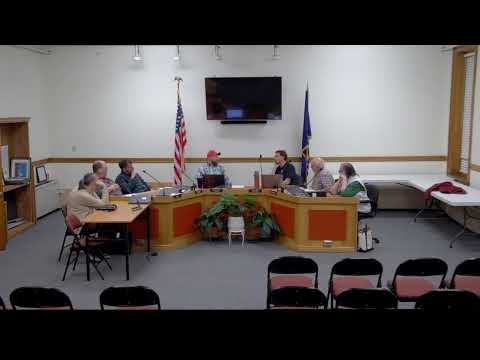
The Scowaggan Planning Board on April (workshop) reviewed a draft ordinance combining rules for homeless shelters and public camping and voted to forward the amended draft to the select board for further consideration. The board focused on three areas: whether bans on sleeping in public can be enforced only when shelter space is available; who should conduct background checks for shelter staff and volunteers; and site-location rules such as a proposed 1,000-foot separation from other sensitive uses.
A board member said recent court rulings limit municipal authority to criminalize sleeping in public when no adequate shelter alternatives exist, and recommended revising the draft to make enforcement contingent on local shelter availability rather than an unconditional ban. Staff said they would research and clarify whether ‘‘available’’ shelter must be within town limits or within a reasonable transportation distance.
Members debated operational requirements the draft would impose on shelters, including floor plans, evacuation procedures, sprinkler and fire-protection systems, maximum occupancy determined by building and life-safety codes, and monthly inspections. The board discussed requiring monthly professional pest-control inspections and submission of inspection reports to the town to address concerns about bed-bug spread and other sanitation problems. Staff said many elements mirror existing building, fire and property-maintenance rules.
A major point of contention was section 17, which in the draft required that "all staff, volunteers, and individuals involved in the operation of [a] homeless shelter shall be subject to review by the Scowaggan Police Department prior to working at the facility." Several planning board members warned that making the police department the de facto administrator of background checks could create operational burdens and potential liability for the town. One member said the town lacks capacity to perform comprehensive vetting for private providers and suggested that providers be required to undertake background checks at their own expense and provide signed verification to the town instead of submitting personnel lists for pre-clearance.
Jeff, a board member who examined similar language from another municipality, urged building a staff-certification requirement into licensing. "I was impressed by requiring that level of certification," he said, referencing suggested elements such as first aid, Narcan training and overdose-prevention training. He proposed that certifications and proof of completed background checks be part of the facility’s licensing package rather than requiring the police to pre-clear every worker.
The board also questioned a proposed 1,000-foot separation between licensed shelters and other sensitive uses (for example, schools or other shelters). Several members noted that such a strict separation could make siting shelters impractical and suggested adding explicit variance language allowing the planning board to reduce required separations after finding that a proposed facility would not adversely impact public health.
On the license-revocation question, members discussed how to prevent revocation based solely on repeated nuisance complaints without objective standards; they suggested defining a threshold of substantiated violations rather than relying on subjective complaint tallies.
After debate, the board agreed on two concrete edits to carry forward: (1) revise enforcement language so a public-camping prohibition is enforceable only when adequate shelter space is available, and (2) strike or revise the language making the police department the primary vetting authority in favor of provider-led background checks with town verification. The board voted to pass the amended draft on to the select board.
Next steps: The select board will receive the planning board’s recommendations and the draft for further review and potential ordinance adoption. The planning board recorded specific implementation questions for staff research, including the exact definition of ‘‘shelter availability’’ and how the town’s police department might be involved in complaint investigations without assuming pre-clearance responsibilities.