Get Full Government Meeting Transcripts, Videos, & Alerts Forever!
Get email alerts on the Audit topic
No spam. Unsubscribe anytime.
Sunbury Finance Committee briefed on biannual audit after accounting-method switch
Summary
Finance staff told the committee the city is under a biannual audit for 2024–2025 and explained a recent switch from an Ohio cash-basis presentation to generally accepted accounting principles, which complicates and may lengthen the audit timeline.
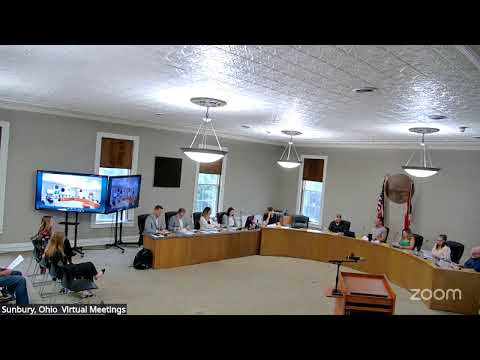
Miss Stefford told the Finance Committee on June 17 that the city is currently under its biannual audit covering tax years 2024 and 2025 and that the reports were filed with the Auditor of State for the year ended Dec. 31, 2025. "We are currently under our biannual audit," Stefford said, noting the city switched from the Ohio other cash-basis presentation to reporting under generally accepted accounting principles (GAAP), which requires more detailed documentation and extra audit work.
The city has contracted with an independent public accounting firm, Perry and Associates, to conduct audits on behalf of the Auditor of State through December 2027, she said. Stefford added that because the accounting method changed between 2023 and 2024, auditors will need extra time and the audit could extend past the end-of-June due date if the auditor’s office grants an extension. "Since there is a major change in the way our financials are presented the audit's going to be a lot more complicated and it could take a lot more time," she said.
Stefford also reviewed compliance items auditors will check, including public-records policy and retention, related-party transactions, Sunshine Law compliance, fraud controls and the certified public-records training requirement for elected officials. She asked council members to provide certificates if they have already completed the three-hour certified public-records training required each term under the Ohio Sunshine Law.
The committee did not take formal action on audit scheduling at the meeting; Stefford said staff would provide documents and follow up on requests from auditors as needed. The audit work is intended to cover both the financial statements and related compliance observations; the committee was advised to expect more staff requests for documentation while auditors complete the additional GAAP-related procedures.