Get Full Government Meeting Transcripts, Videos, & Alerts Forever!
Get email alerts on the Land Use Development topic
No spam. Unsubscribe anytime.
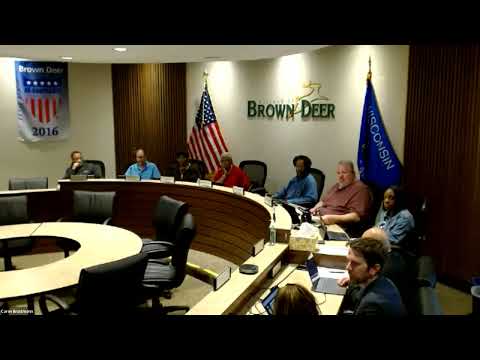
Brown Deer trustees give conditional backing to developer's plan for car wash at former U.S. Bank site
Summary
After extended debate, the Brown Deer Village Board provided conceptual support for a car‑wash‑anchored plan for the former U.S. Bank parcel, with four trustees backing the developer's preferred option and three asking for more master‑plan detail amid traffic and placemaking concerns.
The Brown Deer Village Board on June 15 signaled conditional support for a developer’s concept to place a 1.7‑acre car wash on the former U.S. Bank site at 4200 West Brown Deer Road, while reserving final approval for future site plans.
Board members heard a presentation from developer Mitch Poland and a representative of Jill’s car wash, who described an enclosed‑vacuum design and said the business operates on a high share of recurring “club” customers. Poland told the board the car wash would help attract higher‑quality restaurants and retailers to the broader Riverside Landing project and that lenders expect outlot activity before additional vertical construction.
The request was for feedback on three schematic options; all showed a large car‑wash pad and varying restaurant or retail uses on the remainder of the parcel. Staff said the parcel will grow to about 3.6 acres if surplus land from WisDOT is acquired and emphasized that the board would keep site‑plan control for any east‑side development.
Public commenter Jim Farmer had urged the board to require a strategic development plan, arguing that taxpayer funding too often supports low‑end businesses and that proposed residential units and parking are poorly designed. "I don't support this project since it doesn't inspire desired tourism or destination shopping," Farmer said during public comment.
Trustees questioned traffic, access and neighborhood impacts. Trustee Woods said he feared "a traffic nightmare" at the Deerwood/Brown Deer intersection; others asked how many cars could queue and whether the facility’s indoor vacuum would mitigate dust, noise and winter impacts. Jill’s representatives said the site plan includes long queuing lanes that can hold roughly 27–28 cars, described indoor vacuum bays and mat‑cleaning sinks, and said peak days are rare. "Eighty percent of our business is recurring revenue," a Jill’s representative said, arguing that the operator’s steady customer base helps attract adjacent retail.
After discussion, staff asked trustees for a simple signal: yes, no or need more information. Four trustees gave affirmative feedback (favoring Option 1 or a similar configuration), while three either opposed or asked for a more comprehensive master plan. Developer Mitch Poland said he would start engineering and due diligence and expected to return with detailed site plans within about 90 days. Staff clarified that any formal site plan and signage will still require review by plan commission, building board and the village board.
Why it matters: The U.S. Bank parcel sits at a highly visible intersection and is part of the larger Riverside Landing initiative, which includes Target and planned mixed‑use buildings. A decision to advance an outlot user now can accelerate construction elsewhere on the site and influence the types of tenants that follow.
Next steps: The developer will proceed with engineering and a more detailed site plan and return to the village for formal approvals. The board retained explicit control over what could be built on the east side of the parcel and emphasized placemaking expectations for any future user.