Get Full Government Meeting Transcripts, Videos, & Alerts Forever!
Get email alerts on the Local Government Finance topic
No spam. Unsubscribe anytime.
Eureka Springs council discusses 1% sales-tax option to fund water and wastewater repairs
Summary
At a June workshop, Eureka Springs officials reviewed revenue scenarios for a sales tax dedicated to water and wastewater — ranging from $427,000 (0.25%) to about $1.7 million (1.0%) — and agreed to pursue public outreach, consultant reports and ballot language ahead of a filing deadline with the county clerk.
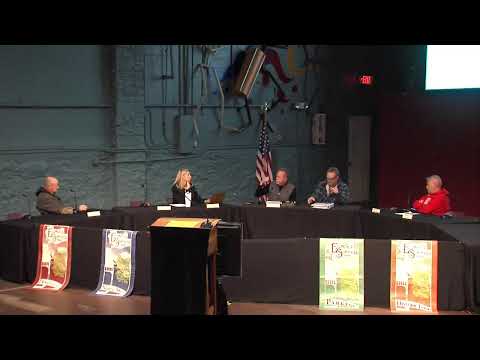
Eureka Springs Mayor Pro Tem Steve Holfield opened a special workshop on a proposed sales-tax increase and turned the presentation over to Mike, who outlined revenue estimates and a process for placing the measure on the November ballot.
Mike said that, based on 2025 sales, a 0.25% increase would generate about $427,000 annually, 0.5% about $855,000, 0.75% about $1.283 million and 1.0% roughly $1.7 million. He said the proposal under discussion would be 100% dedicated to the water department and wastewater system.
Why it matters: City officials said the municipal water and sewer systems face extensive deferred maintenance — previously cited estimates have put long-term needs near $30 million — and that a dedicated sales tax could provide a larger, more stable revenue source for major repairs and bonds while giving staff the option to revisit customer rates.
"I believe that we ought to go for a full 1%," Terry said, arguing that rising costs and future phases of work mean the city should seek a larger revenue stream now. Other council members agreed the measure should be easy to explain to voters and tied to concrete projects, such as replacing century-old sewer and water lines.
Officials discussed how the sales tax would interact with existing revenue tools. Mike and others said the rate study used the INI (the 5% refurbishment and replacement account required under statute) when setting customer rates; the sales tax would not automatically replace the INI but could allow the city to do a new rate study and consider lowering some customer charges. Staff reported the INI currently generates about $220,000 for maintenance and repairs, far less than the revenue a 1% sales tax would produce.
Council members asked whether sales-tax proceeds could be used to pay down an existing $6 million loan for the wastewater plant. Staff said that is a legal question requiring bond counsel and that, as currently structured, the sales tax would primarily support ongoing operations and give flexibility that could free up rate revenue to help meet loan payments; staff said they would confirm legal constraints.
The meeting also covered outreach and timing. Officials emphasized education: shifting some costs to sales tax would spread burdens to visitors as well as residents, but voters will need concise, believable language about what the money will pay for. Staff said the ordinance calling for an election must be adopted this summer and that ballot language must be filed with the county clerk 70 days before the election; staff cited a filing deadline of September 1 after confirmation with the county clerk.
No vote was taken; council members suggested follow-up workshops, town-hall briefings and working with consultants (Progressive Solutions and previous engineering reports) to produce updated project-cost estimates and ballot language. Suggestions at the close of the session included having draft ballot language ready by early summer and scheduling a public hearing where residents can comment before any measure is finalized.
The council closed by underscoring two near-term tasks: confirm legally permissible uses of sales-tax revenue (including whether it may be applied to existing loan obligations), and assemble clear, project-level numbers that the city can use in outreach to voters.