Get Full Government Meeting Transcripts, Videos, & Alerts Forever!
Get email alerts on the Utility Funding topic
No spam. Unsubscribe anytime.
Eureka Springs council schedules workshop on proposed sales tax to fund water, sewer repairs
Summary
Council members agreed to hold a workshop to refine a proposal to put a sales tax on the ballot to pay for long‑term water and sewer infrastructure needs; 1% was discussed as the likely option after staff and bond counsel studies. The workshop will shape ordinance language, spending priorities and public outreach.
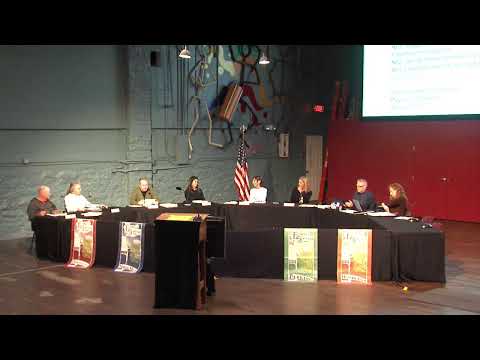
Eureka Springs — City Council members agreed March 9 to schedule a workshop to develop a proposed sales tax intended to fund large-scale water and sewer repairs and to prepare an education campaign for voters.
The discussion followed a workshop review of a rate study that, according to Councilmember Rochelle, estimated roughly $55 million in water system replacement needs and $71 million in sewer improvements. Rochelle said the sales-tax approach was raised to relieve pressure on household utility bills and provide a means to finance multi‑million‑dollar projects.
"When we looked at the rate study ... it looks like it was $55 million estimated water system improvements, and $71 million in estimated sewer improvements," Rochelle said. Council members and staff emphasized that the next workshop will define which projects the tax would fund and whether a sunset or bonding language will be included.
City finance staff and bond counsel will provide options on how ballot language can be written, what a 1% tax might generate in annual revenue, and how much the city could bond against that revenue. Michael (council member) said bond counsel will prepare estimates for 10‑, 15‑ and 20‑year amortizations so the council can match tax duration to expected equipment lifespans.
Performance Services, a consulting firm working with the city on infrastructure planning, presented its preliminary analysis at the meeting and said its work to date has been at no cost to the city. Donnie Chambers of Performance Services said the firm will return with "level one budgets" and funding options, including energy‑savings performance contracts and design‑build delivery models, to help the council weigh alternatives.
The council did not set a final tax rate but discussed 1% as the leading candidate and agreed to hold a follow‑up workshop—scheduled before the next council meeting—to (1) vet project priorities with Public Works, (2) review the rate study and engineer spreadsheets, and (3) prepare public education materials required for a ballot measure application.
What happens next: staff and the city’s financial advisor will produce debt and revenue scenarios and draft ordinance options for the workshop. Council must place any tax question on the ballot; the earliest feasible election timeline noted by staff requires completion of materials roughly 70 days before the chosen election date.