Get Full Government Meeting Transcripts, Videos, & Alerts Forever!
Get email alerts on the Municipal Budget topic
No spam. Unsubscribe anytime.
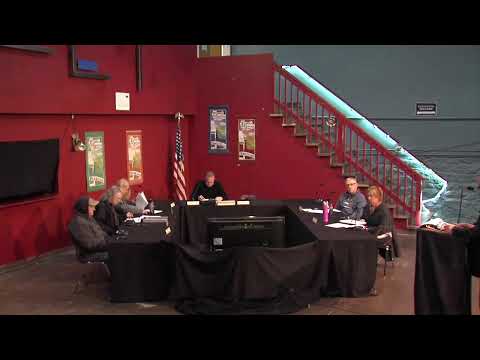
Eureka Springs budget workshop reviews 2025 finances as business owners urge retailers to resume tourism tax share
Summary
City staff presented 2025 year‑end revenues and expenditures and new charts separating restricted funds; business owners at the workshop urged the council to revisit a referendum that left lodging and restaurants collecting an extra tourism charge, arguing retailers should share the burden.
Eureka Springs city staff on Feb. 23 reviewed 2025 revenue results, capital spending and debt schedules at a budget workshop in which local business owners urged the council to reconsider who must collect a local tourism charge.
The workshop opened with a presentation by Michael Atkins, who said December sales-tax receipts were $346,719.26 and that year‑to‑date sales-tax collections finished about $44,855.77 (1.33%) higher than 2024. "We ended up bringing in a little over $12 million," Atkins said, noting staff had budgeted roughly $13.3 million in all funds for the year and that grouping restricted funds with general funds had made the city’s overall results look like a $168,000 loss. Atkins said staff will produce clearer charts for 2026 that separate general‑purpose revenues from restricted funds so the public can see what money is movable and what is not.
Why it matters: the presentation showed the city remained close to projected collections but that visible shortfalls can be misleading when restricted funds are included in consolidated totals. The workshop also identified near-term cash and debt steps: staff reported roughly $4.905 million in checking and about $835,000 in savings/CDs (totaling about $5.74 million), planned CD maturities in March and May 2026, and capital investments of about $163,000 in fire equipment, $149,000 at the wastewater plant and $133,000 in transit.
During the discussion, Atkins detailed how sales-and-use tax distributions flowed to the general fund, streets and parks and supplied a sector breakdown showing retail (about 32.9%), lodging (about 20.8%) and food and beverage (about 16.4%) as the largest sources of taxable activity for the period presented. He also explained an itemized "miscellaneous" category includes travel accommodations, restaurants and some small/new business categories.
Several participants pressed the council over a tourism‑related charge collected and distributed by a body referenced in the workshop as the CAPC. One business owner who identified themselves as operating lodging and restaurant businesses said the current arrangement leaves lodging and restaurants "placing the burden of 100% of this tax on" them and asked the council to "revisit retailers participating in this" so the fee is shared more equitably. "I want a fair and equitable distribution and I think that's fair," the speaker said.
Others at the table said changing who collects the charge would require a formal process and likely a ballot measure. Michelle, who spoke during the discussion, said, "Well, that would have to go back on the ballot anyway." Supporters of the current arrangement argued the CAPC uses proceeds for townwide promotion that benefits all businesses, while critics said CAPC should review its spending and efforts to increase visitation.
On debt and capital, Atkins said the next bond payment in April 2026 will be interest‑only, and that the particular bond discussed is expected to be paid off by October 2027. He also described a ledger of interfund transfers the city treats as loans into the water and wastewater funds dating to 2021; Atkins said the water fund required transfers in 2024 but not in 2025, and that stabilization could allow repayments to the general fund in future years.
No formal motions or votes were taken during the workshop. The council adjourned the workshop with a reminder of the next meeting at 6:00 p.m.
What to watch next: staff said they would supply a redesigned 2026 budget presentation separating restricted and general funds and will return with the capital and debt details at a future meeting. Any change to who collects the CAPC tourism charge would require a formal request and likely a ballot referral, per multiple participants' statements.