Get Full Government Meeting Transcripts, Videos, & Alerts Forever!
Get email alerts on the Student Sleep Public Health topic
No spam. Unsubscribe anytime.
Student intern tells board of health: sleep boosts grades and mental health, proposes school outreach
Summary
Haley Long, a student intern, presented to the board of health research and interviews linking adolescent sleep to academic performance and mental health, citing a statistic that 97% of students get less than recommended sleep and recommending simple school outreach such as posters and screen-time guidance.
Haley Long, a student intern presenting to the board of health, outlined evidence she said links better sleep with higher grades, improved memory and attention, and stronger mental health among teens.
"Sleep is not a waste of time and is actually one of the number one tools that students can use to support their learning," Long told the board as she summarized findings from interviews with clinicians and sleep researchers.
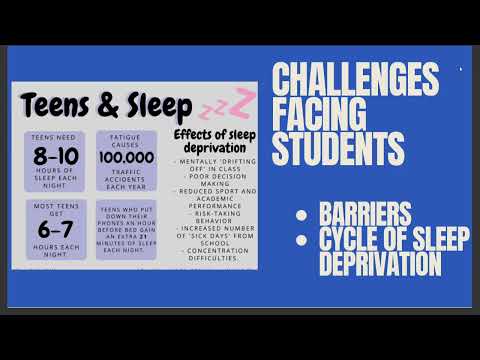
Long described sleep biology that shifts adolescents toward later bedtimes and said that early school start times, heavy homework loads and evening screen use often collide with that biology to produce chronic sleep shortfalls. She cited a statistic — "97% of students get less than the recommended amount of time of sleep" — to underscore the prevalence of insufficient sleep; the presentation did not provide a published citation for that figure.
Drawing on interviews she said included Dr. Maria Tartaglia, a pediatrician at Boston Children's Hospital, and Dr. Philip Pearl, a professor of neurology at Harvard Medical School, Long described how deep sleep restores the body, REM sleep consolidates memory, and regular sleep supports executive functions such as judgment and planning. She said those physiological functions help explain why longer, more efficient sleep is associated in studies with higher grade-point averages.
Long recommended practical steps students and schools can promote: consistent bedtimes and wake times, reducing nighttime screen use (she noted studies Long cited that link putting a phone away an hour before bed with modest increases in nightly sleep — about 21 minutes on average), morning light exposure, daytime exercise and creating a dark sleep environment. She emphasized adopting changes incrementally rather than overhauling routines all at once.
Board members praised the clarity of the project and suggested turning the research into hallway posters or other school materials to reach peers. Long said her school's poster program could host such materials.
No formal motion, vote or policy action was recorded during the session; the presentation was heard and commended by board members who encouraged outreach and education as near-term steps.
The board adjourned its discussion of the presentation after expressing support for distributing informational materials; no implementation timeline or funding was specified.