Get Full Government Meeting Transcripts, Videos, & Alerts Forever!
Get email alerts on the Animal Control topic
No spam. Unsubscribe anytime.
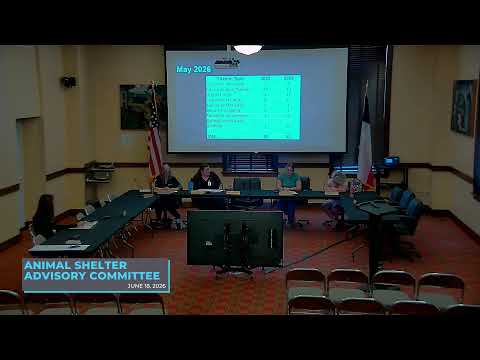
Shelter staff report May intake, 84.85% live release rate; officials detail enforcement and adoption plans
Summary
San Angelo shelter staff reported 362 new arrivals in May and a live release rate of 84.85%, detailed euthanasia and field-service breakdowns, and described enforcement practices for spay/neuter and vaccination requirements while announcing a public adoption event.
Shelter staff in San Angelo presented May 2026 intake and outcome statistics and described how enforcement and compliance efforts factor into spay/neuter and vaccination rates.
"For the month of May, we had 362 new arrivals, 41 adoptions, 39 transfers, 44 redeemed by owner, 29 SNR releases, 15 wildlife releases, and 183 deceased," a shelter staff member reported, adding that the live release rate for May was "84.85." The staff provided species and reason breakdowns for deaths and euthanasia, saying 108 deceased were dogs, 74 were cats and one was wildlife; euthanasia reasons included aggression (22), capacity (43), bite or rabies exposure investigations (9), medical reasons (94), behavioral (5) and 10 that died in custody or were dead on arrival during transport.
Why it matters: the figures combine to give an overall picture of shelter capacity and outcomes and were accompanied by staff explanations of how enforcement, verification with private veterinarians and limited in‑shelter surgical capacity affect recorded compliance rates.
In a detailed rundown of field operations, staff said the shelter logged 680 field-service calls in May: 291 stray responses, 148 enforcement rechecks, 88 wildlife responses, 38 bite investigations, 60 transports, 22 owner-release or seized intakes and 33 proactive patrols. Citations increased slightly from 30 last year to 32 this May, most commonly for failure to vaccinate, failure to spay/neuter and animals at large.
When asked why spay/neuter citations are down year over year, a committee member noted the drop; staff attributed the change to a shift toward compliance work alongside enforcement. Staff explained some reclaimed animals are fixed and vaccinated before return to owners after the shelter verifies veterinary records, but confirmed the shelter does not currently have capacity to provide high volumes of on‑site spay/neuter procedures for reclaimed animals. "This is enforcement," staff said of citations, "but we are also trying to do compliance, which is what our ultimate goal is, is to have the animals spayed or neutered."
Staff also clarified the shelter's limits: it cannot alter an owner's property without consent, so an owner may legally reclaim an unaltered animal and accept a citation; repeat noncompliance is handled through municipal court. The shelter described the citation route as a class C misdemeanor handled by municipal court rather than an in‑shelter remedy.
On data tracking, staff said the shelter separated a new "proactive patrols" metric from stray and enforcement counts to better distinguish proactive work from true calls for service.
As an operational note, staff announced an adoption event on the 20th at a local hotel referred to in the meeting as "America." Staff said dogs attending the outdoor event will be fixed, vaccinated and ready for adoption; cats will not be brought to the outside event but a binder listing available cats and their medical/fix status will be available for attendees.
Procedural notes: the consent agenda, including approval of the May 21, 2026 minutes, was moved and seconded and carried by voice vote with no opposition voiced. A motion to adjourn was also moved and seconded and carried.
The meeting moved on from the statistics presentation to routine follow-up items and then adjourned.