Get Full Government Meeting Transcripts, Videos, & Alerts Forever!
Get email alerts on the Refuse Privatisation topic
No spam. Unsubscribe anytime.
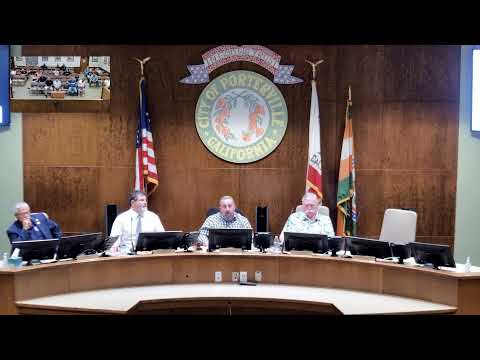
Porterville residents press council over proposed refuse privatization and vendor access
Summary
Residents and city refuse workers told the Porterville City Council they don't want the city's refuse service privatized and raised concerns that a prospective vendor received early access and briefing materials; council members said no final decision has been made and cited state electrification rules as a complicating factor.
Public comments at a Porterville City Council meeting focused heavily on the city's consideration of outsourcing refuse services, with workers and residents asking the council to preserve local control and protect jobs.
Dozens of speakers described the sanitation workforce as skilled, long-serving city employees and urged the council to prioritize customer service and clear standards rather than a sale. "Privatizing the service not only will leave our residents feeling unrepresented, but also leaves a feeling of bad leadership," resident Rosio Ree said, urging the council to look at alternatives and long-term costs.
The council has not voted to privatize refuse. Mayor Meister and council members repeatedly told the public that no final decision has been made and that staff must complete financial analyses and public engagement before any action. "We haven't even started doing the numbers," Mayor Meister said in response to comments urging immediate clarity.
Several speakers asked why representatives from a prospective contractor (named variously in public remarks and city documents) were given tours of city facilities and operational data before a formal solicitation. One commenter with procurement experience warned the council that the proposed charter change on procurement (see separate story) would give the council broader authority but leave bidding thresholds and oversight to later rules. "Voters deserve to know exactly what protections they are giving up," a former procurement official told the council.
Council members defended the public process but acknowledged community mistrust. Vice Mayor McCurvy said the city is still gathering information and emphasized council interest in protecting workers: "If we do sell the enterprise, I'm not saying we're going to, I'm going to make sure that you have the same package that you have for pay." Council members pledged ride-alongs with refuse crews, and several said they would advocate to preserve jobs if a privatization path were chosen.
Members also flagged an emerging state constraint. Vice Mayor McCurvy and others cited AB1436, a California law that will require municipal refuse fleets to electrify by 2030, as a major factor shaping any outsourcing decision. Electrifying a fleet could require large capital outlays and a larger fleet to meet service schedules, a dynamic that could limit options or increase rates.
City Manager Richard Tree said staff is still collecting data, meeting with multiple vendors, and will bring more detailed financial analysis back to the council before any vote. "This is preliminary talk," Councilman Rivas said, asking residents to watch for the item on a future agenda.
What happens next: the council directed staff to continue studying options, including potential financial impacts, fleet requirements tied to AB1436, and employee protections; no contract award or sale decision was taken at the meeting.
Speakers quoted in this article are drawn from the meeting record and public comments list provided to the council.