Get Full Government Meeting Transcripts, Videos, & Alerts Forever!
Get email alerts on the Public Safety topic
No spam. Unsubscribe anytime.
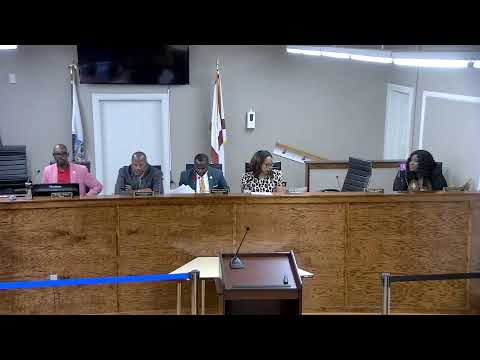
Center Point council reviews radios, body cameras and records software; debates how to pay for startup costs
Summary
Council members discussed proposals for handheld and in‑car radios, Axon body and in‑car cameras, RMS records software and uniforms for the new public safety department and questioned whether one‑time startup costs should come from savings or existing budget lines.
A public safety official told the Center Point City Council at a work session that the city lacks handheld radios and in‑car radios for its patrol vehicles and presented quotes for handheld units, vehicle installs, records management software (RMS) from Southern Software and Axon body and in‑car cameras.
The official said the absence of reliable radios is a liability for officers who currently must call 911 from cell phones and that new equipment would allow officers to file reports, take theft and harassment complaints, and improve on‑the‑street response. “We don't have radios, handheld or radios inside the vehicles. And so that is a great liability to the officers,” the official said.
Council members asked whether the executive/unmarked vehicle would receive the same equipment and how many vehicles would be outfitted now versus in future budget cycles. The presenter said there are currently two patrol vehicles with a third unmarked Tahoe that might be used for out‑of‑town responses; the plan is to equip the two patrol vehicles initially and buy more equipment in the next budget cycle.
Budgeting became the central question. The clerk told the council the initial startup cost had been expected to come from savings and that, while revenue was tracking slightly behind projections, a one‑time purchase likely would not be “catastrophic” for the city’s cash flow. Council members pressed whether funds should be reallocated from existing public safety lines or taken from savings and asked the clerk to confirm available balances and whether a budget amendment would be required.
A council member asked about ongoing monthly obligations and pointed out that ending existing recurring costs, such as an external camera contract, could free some funds; the clerk confirmed the city could stop paying a block camera contract to reduce monthly costs but that startup costs still needed a funding source.
The council did not take a formal vote on equipment purchases during the work session. Members asked staff to provide a clear, itemized estimate, to confirm which vehicles will be outfitted and to identify the funding route (savings, budget amendment, or reallocation) before placing purchase items on a future council agenda.